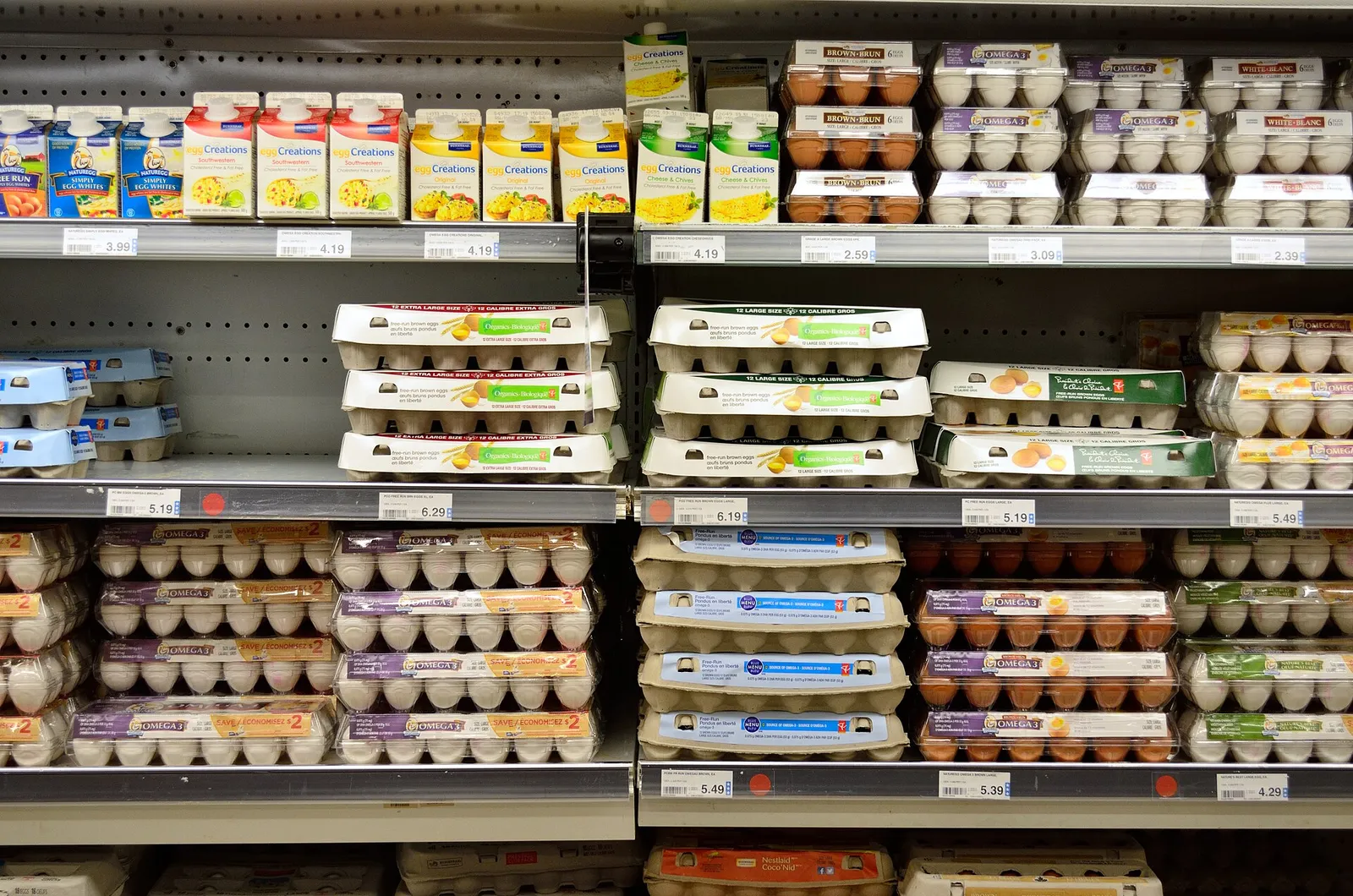
The great egg-price shock of the past two years has produced an unusually literal remedy: the companies accused of rigging prices will pay part of their penalty in eggs.
Three of the biggest U.S. egg producers — Cal-Maine Foods, Versova and Hickman's Egg Ranch — agreed to pay a combined $3.3 million and donate about 53 million eggs to food banks and nonprofits to settle allegations that they illegally coordinated pricing, the U.S. Justice Department and 17 state attorneys general announced on June 30. None of the companies admitted wrongdoing.
What they were accused of
The case centers on a pricing benchmark most shoppers have never heard of. Wholesale and retail egg deals across the industry are pegged to a daily price quote published by Urner Barry, a widely used reference. Prosecutors alleged that the three producers "secretly communicated" from roughly June 2022 to March 2025 to influence that benchmark, according to the settlement filings. Nudging the reference price up, the theory goes, lifted what buyers paid across the market — a quiet lever with nationwide reach. (A price benchmark is a published reference figure that contracts use to set prices; manipulate the benchmark and you move prices without an obvious conspiracy over any single sale.)
The backdrop: record prices and a bird-flu crisis
The timing is what made the allegations resonate. A severe outbreak of avian influenza killed millions of laying hens and genuinely tightened egg supply, sending prices to a record $6.23 a dozen in early 2025, per CNBC. Regulators did not claim the producers invented the shortage — the bird flu was real — but alleged they exploited the chaos by coordinating their price signals when consumers were least able to shop around. Egg prices have since fallen sharply as flocks recovered, though fresh bird-flu detections this summer have raised the risk of renewed pressure.
The unusual settlement
The remedy stands out. Rather than a pure fine, the deal pairs a modest cash payment to states with a large in-kind donation of the very product at the center of the case. By the breakdown reported by Food Dive, Cal-Maine will pay $1.5 million and donate 30 million eggs, Versova $800,000 and 20 million eggs, and Hickman's $1 million and roughly 3.25 million eggs. The companies must also install antitrust compliance programs and stop discussing pricing with competitors. The settlements still need federal court approval and are subject to a 60-day public-comment period.
It is worth keeping the numbers in proportion. The $3.3 million cash figure is tiny next to the industry's recent earnings — Cal-Maine, the largest U.S. producer, reported roughly $1.22 billion in profit in its latest fiscal year, a stretch that captured the price surge, per Fortune. Critics will note that a settlement worth a rounding error against those profits, with no admission of liability, is unlikely to deter much on its own.
Why it matters
For consumers, the case is a reminder that even a genuine supply shock can be compounded by how prices are set — and that opaque industry benchmarks can move the cost of a grocery staple for everyone. For companies and investors, it signals renewed antitrust attention on food producers and on benchmark-based pricing, a mechanism regulators are increasingly scrutinizing across industries. And for the food-bank recipients who will get 53 million eggs, it is a tangible, if symbolic, transfer. Boursel takes no side on the litigation, which the companies dispute; the takeaway is that after two years of painful egg prices, regulators have extracted a settlement measured partly in eggs — light on cash, heavy on symbolism, and a marker of tighter scrutiny of how everyday prices get set.