A company that has spent years arguing that stocks and funds belong on a blockchain just made the case with its own shares.
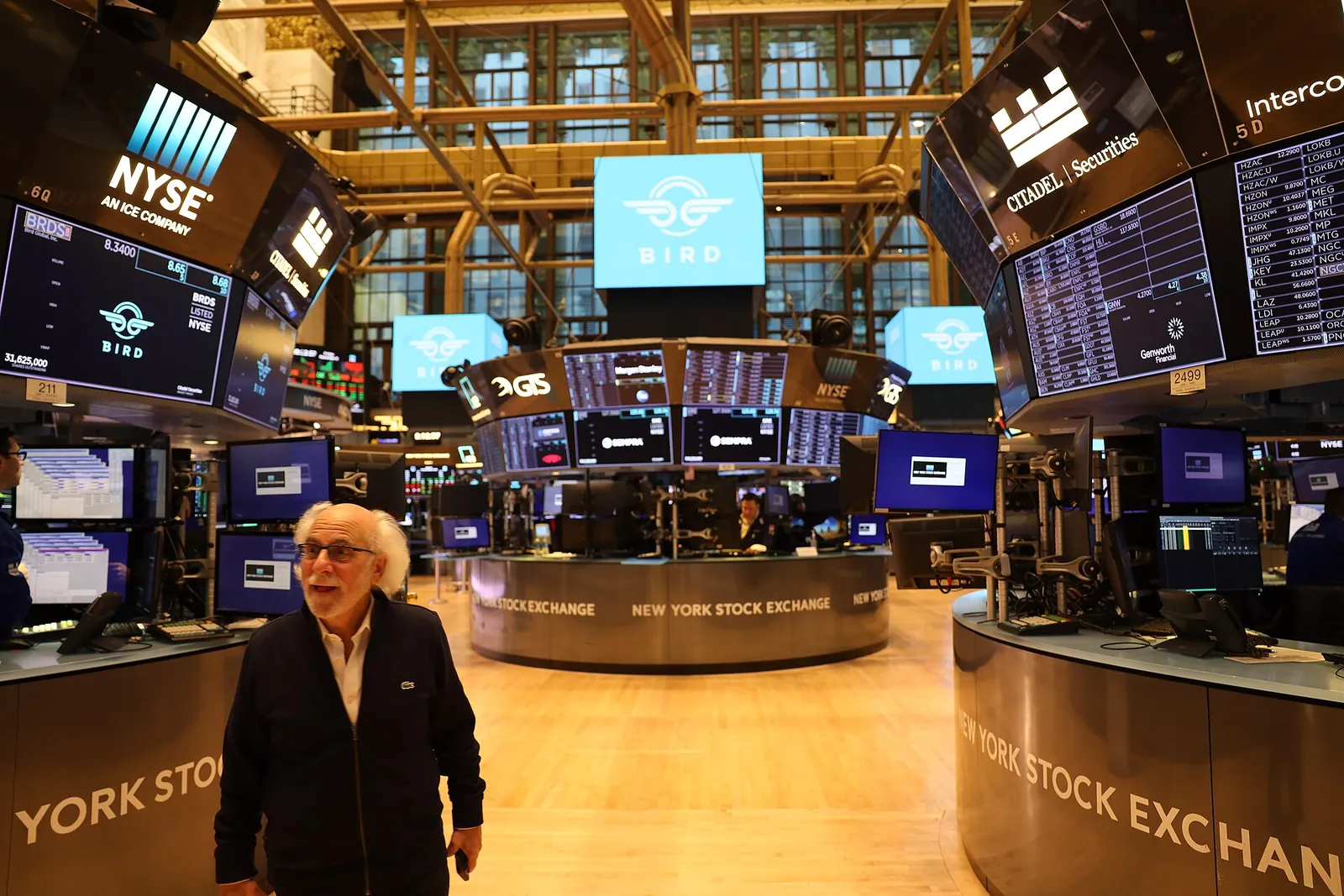
Securitize, a leading tokenization firm backed by BlackRock, started trading on the New York Stock Exchange under the ticker SECZ on Wednesday, with the stock opening up more than 8% at about $12.75, Decrypt reported. The company reached the public market through a merger with a Cantor Fitzgerald-backed blank-check company (a SPAC), a deal that raised around $400 million. (A SPAC, or special-purpose acquisition company, is a shell firm that raises money in an IPO and then merges with a private business to take it public.)
Tokenizing itself
The eye-catching part came the same day. Securitize issued $266 million of tokenized SECZ shares onto the Solana and Avalanche blockchains — digital tokens that represent the very same common stock trading on the NYSE, which the company billed as "the largest tokenized stock in the world," per Decrypt. Chief Executive Carlos Domingo was pointed about the distinction: "SECZ is not a synthetic token or offshore wrapper. It is issuer-sponsored tokenization of the same common stock trading on the NYSE." (Tokenization means issuing a blockchain token that stands in for a real asset — here, a share — with the asset held and tracked through the normal legal plumbing rather than a copycat crypto derivative.)
That last point is the whole pitch. Earlier "tokenized stocks" were mostly unregulated products issued offshore. Securitize is a registered broker-dealer and transfer agent, so its tokens are the official shares, not lookalikes — the same distinction other firms, like Ondo Finance, have been racing to establish.
What Securitize actually does
Securitize's business is turning traditional financial assets — money-market funds, bonds, private credit — into blockchain tokens that can settle in seconds and trade around the clock. As of June it managed more than $4 billion in tokenized real-world assets, per company disclosures. Its highest-profile job is tokenizing BlackRock's BUIDL, a large tokenized money-market fund that has become a flagship for the idea that Wall Street's safest instruments can live on-chain. Putting its assets on Solana and Avalanche, not just Ethereum, is a bid to reach beyond crypto insiders to a broader base.
Why a tokenization firm listing matters
There is a neat symmetry here: the company that tokenizes other people's assets is now both a public company on the NYSE and a tokenized stock on two blockchains at once. That dual existence is meant as a proof of concept — evidence that a real, regulated U.S. equity can trade on crypto rails alongside the traditional market, with the same legal rights.
The backdrop is a fast-growing "real-world asset" (RWA) movement, in which banks, asset managers and crypto firms are tokenizing funds and securities. The tokenized-asset market has expanded sharply over the past year into the tens of billions of dollars, and boosters project much larger figures ahead — though those long-range forecasts are promotional estimates, not certainties.
Why it matters
For crypto, Securitize's debut is a maturity marker: a core piece of tokenization infrastructure is now a public company, subject to the disclosure and scrutiny that entails. For traditional finance, it is another sign that tokenization is moving from experiment toward plumbing — with a BlackRock-backed firm and blue-chip funds leading the way, rather than crypto-native speculation. And for investors, the SECZ experiment poses a concrete question: will a tokenized version of a real stock attract genuine trading, or remain a symbolic showcase? Boursel gives no investment advice; the takeaway is that the company most associated with putting assets on a blockchain has now put itself there too — a bet that the line between Wall Street and crypto rails will keep blurring.