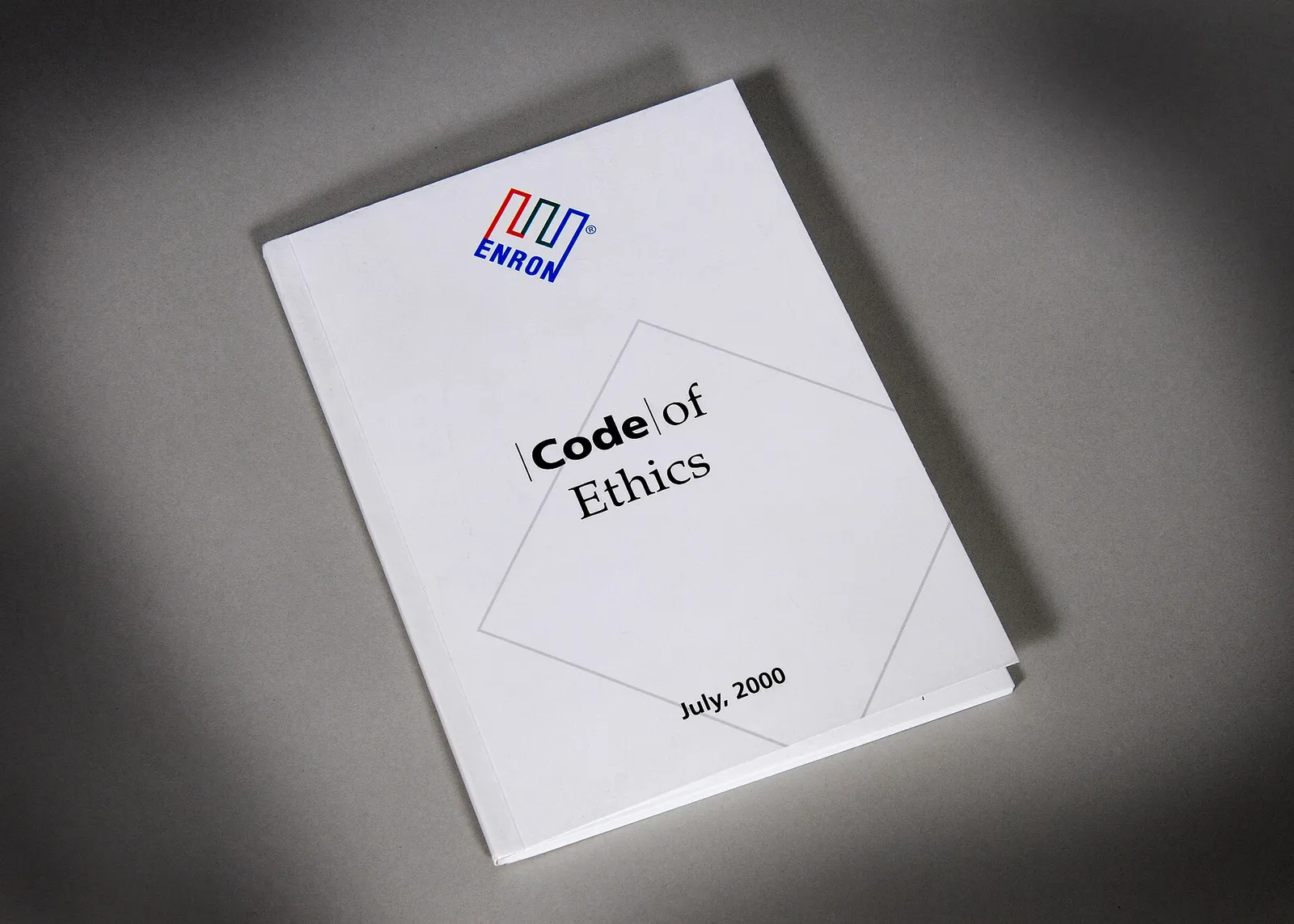
For most of the 1990s, Enron was a business-press darling — named America's "most innovative company" year after year, a symbol of a smarter, faster capitalism. Then, almost overnight, it became a byword for corporate fraud. The story is the definitive lesson in how accounting tricks can hide a rotting core.
What Enron was
Enron began as a fairly ordinary natural-gas pipeline company and reinvented itself in the 1990s as a high-flying energy-trading firm, buying and selling contracts for gas, electricity and much else. Wall Street loved the story of a stodgy utility turned Wall-Street-style trader, and its stock soared. By 2000 it was one of the largest companies in the United States, admired for its swagger and complexity.
The complexity, it turned out, was the point.
How the fraud worked
Behind the glowing results sat a system built to deceive, as accounts of the scandal detail. Two techniques did much of the damage:
- Mark-to-market accounting. Enron booked the entire projected future profit of long-term deals as income today, the moment a contract was signed. If those profits never materialized, the earlier numbers were already banked — a way to report profits that didn't exist yet, and might never.
- Special-purpose entities. Enron created a web of shadowy off-the-books partnerships and shell companies, and used them to hide enormous debts and losses off its own balance sheet, making the company look far healthier than it was. Some were run by Enron's own executives, who enriched themselves in the process.
The result was a company that appeared wildly profitable and financially sound while, underneath, it was drowning in concealed debt.
The collapse
In 2001, the illusion unraveled. As questions mounted about its opaque finances and the hidden partnerships came to light, Enron's stock — once above $90 — collapsed toward zero. On December 2, 2001, Enron filed for Chapter 11 bankruptcy, with some $63.4 billion in assets, making it the largest corporate bankruptcy in U.S. history at the time, as the record shows. Thousands of employees lost their jobs and, with their retirement savings tied up in Enron stock, much of their nest eggs too.
The fallout
The damage rippled far beyond Enron:
- Arthur Andersen destroyed. Enron's auditor, Arthur Andersen — one of the world's five largest accounting firms — was implicated for signing off on the accounts and then shredding documents. Convicted of obstruction, it effectively collapsed, wiping out tens of thousands of jobs at a firm that had nothing to do with Enron's fraud.
- Executives convicted. Top Enron leaders, including its chairman and chief executive, were later found guilty of criminal charges.
- A new law. The scandal — soon compounded by others — prompted the Sarbanes-Oxley Act of 2002, which tightened corporate accounting rules, made executives personally certify their financial statements, strengthened auditor independence and stiffened penalties for fraud.
Why it still matters
Enron is the case study every investor and executive learns from because it exposes a permanent vulnerability: a company's reported numbers are only as honest as the people and auditors behind them. Its downfall is why we have tougher disclosure rules, more independent auditors and executives who must personally vouch for the books. And it's a warning that dazzling complexity can be a place to hide, not a sign of genius. Boursel gives no investment advice; the lasting lesson is skepticism — when a business is too complex to understand and too good to be true, those two facts may be related.