The 1920s roared with easy optimism, and nowhere louder than on Wall Street, where a soaring stock market seemed to promise endless riches. Then, over a few days in the autumn of 1929, it stopped. The crash that followed became the defining financial catastrophe of the century.
The boom before the bust
Through the late 1920s, American stocks climbed relentlessly, and ordinary people piled in — many buying "on margin," borrowing heavily from brokers to buy shares with only a small down payment. That leverage magnified gains on the way up and, as everyone would learn, losses on the way down. Valuations detached from reality; belief that prices could only rise became its own engine.
The crash
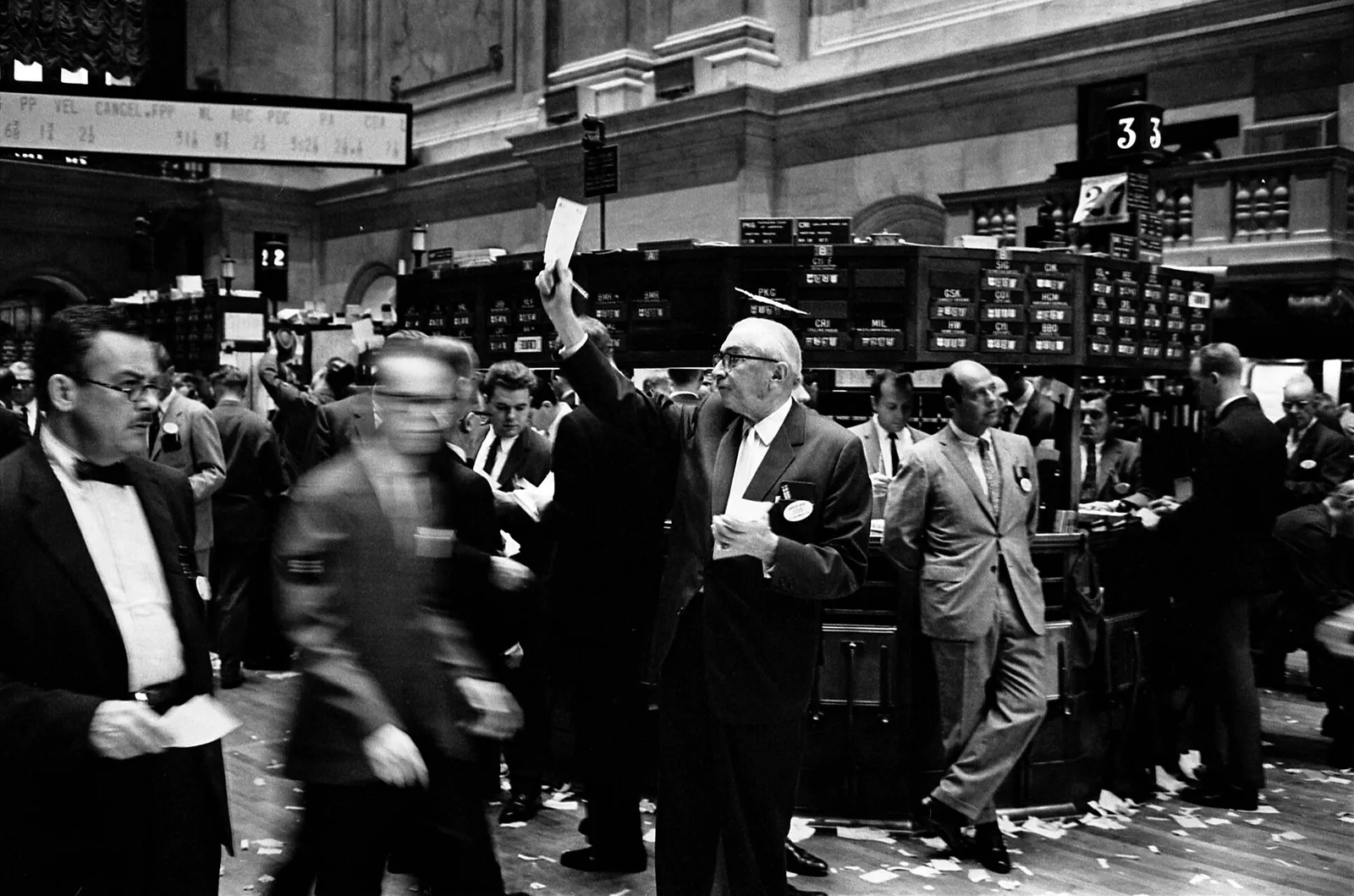
The break came in late October 1929. The panic centered on two days: "Black Thursday," October 24, and the worst, "Black Tuesday," October 29, when a record of roughly 16 million shares changed hands in a wave of forced selling and billions in value evaporated, as the Federal Reserve's history records. Over that stretch the Dow Jones Industrial Average fell about 25%. Margin calls forced leveraged investors to dump shares to cover their loans, which drove prices down further, triggering more calls — a vicious spiral.
And it didn't stop in 1929. The market kept grinding lower for nearly three more years, until the Dow bottomed at 41.22 in the summer of 1932 — roughly 89% below its 1929 peak, its lowest level of the century. Nine dollars in ten, gone.
From crash to Depression
The crash is often blamed for the Great Depression, but the truth is more layered. The stock collapse shattered confidence and wealth, but the deeper catastrophe came through the banking system. As the economy buckled, waves of bank failures swept the country; frightened depositors rushed to withdraw savings, and thousands of banks collapsed, wiping out deposits and choking off credit. Unemployment soared — reaching roughly a quarter of the U.S. workforce at the depth of the 1930s. The crash was the spark; a fragile banking system and policy failures turned it into a decade-long disaster.
What it changed
The wreckage reshaped finance permanently. In its aftermath the United States built the guardrails that still govern markets: the Securities and Exchange Commission (SEC) to police markets and require disclosure; federal deposit insurance to stop bank runs by guaranteeing savings; and rules separating and restraining risky banking activity. Much of the modern financial safety net was designed by people determined never to repeat 1929.
Why it still matters
The 1929 crash endures as the ultimate cautionary tale, and its lessons recur in every later panic:
- Leverage is the accelerant. Buying on borrowed money turned a downturn into a collapse — the same dynamic seen in 1987, in 2008 and in the fall of Long-Term Capital Management.
- A crash and a depression aren't the same thing. Markets can fall hard without wrecking the economy; what made 1929 catastrophic was the banking crisis that followed.
- Safeguards are written in hindsight. Deposit insurance and securities regulation exist because their absence was so devastating.
Boursel gives no investment advice; the enduring point is that 1929 set the template — speculation fueled by debt, a sudden loss of confidence, and a financial system too fragile to absorb the shock. Nearly a century of market safeguards traces back, in one way or another, to that October.