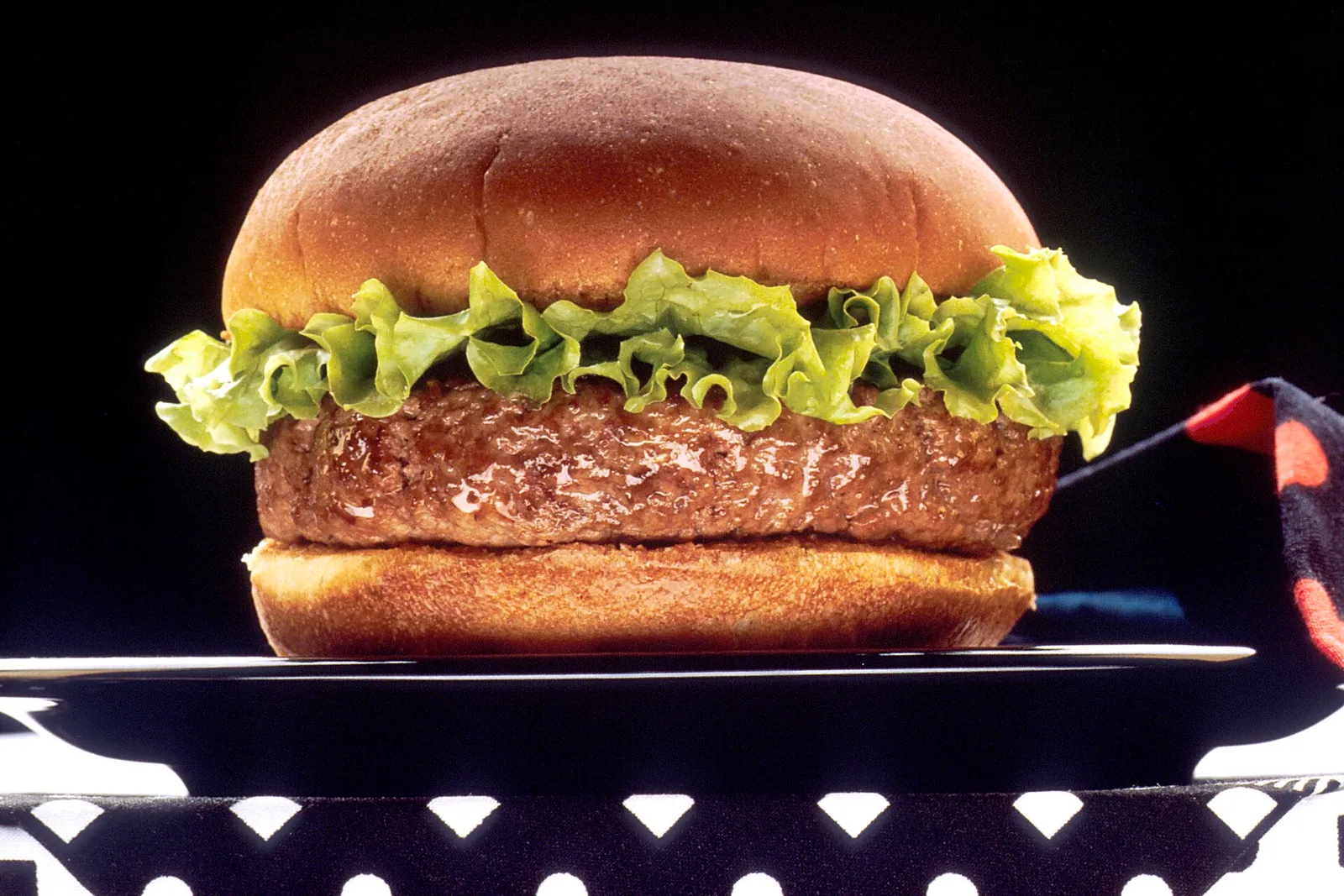
How do you tell whether a currency is "too cheap" or "too expensive"? Economists have complicated answers. The Economist magazine has a simpler one: check the price of a burger. Its Big Mac Index turns a fast-food staple into a window on the global currency market.
The idea behind it
The Big Mac Index was introduced by The Economist in September 1986 as a light-hearted way to illustrate a serious economic idea: purchasing power parity (PPP), as the index's history records. PPP holds that, over the long run, exchange rates should move so that an identical basket of goods costs the same in different countries once you convert the prices into a common currency, as the theory is defined.
The clever trick is the basket. Instead of a complex bundle of goods, the index uses one product that is made to nearly the same recipe all over the world: the McDonald's Big Mac. Because a Big Mac is roughly the same everywhere, comparing its price country to country offers a rough, tangible read on whether currencies are trading at their "fair" value.
How it works
The math is intuitive. Suppose a Big Mac costs $5 in the United States and £4 in Britain. That implies an exchange rate — the "burger rate" — of $5 ÷ £4 = $1.25 per pound. Now compare that to the actual market exchange rate:
- If the real rate is higher than the burger rate — say the pound actually trades at $1.40 — then, by this measure, the pound looks overvalued against the dollar (the burger is more expensive in Britain than the exchange rate "should" make it).
- If the real rate is lower, the pound looks undervalued.
Do this for dozens of countries and you get a quick, cheeky map of which currencies look cheap or dear against the dollar.
Why it's more useful than it sounds
The Big Mac Index was meant as a teaching gag, but it endures because it makes an abstract idea concrete. It captures the intuition behind PPP — that a dollar should buy roughly the same real stuff wherever you are — in a way anyone can grasp. It has even spawned spin-offs and become a genuine reference point that economists and travelers cite.
Crucially, it also illustrates a real-world truth: exchange rates often don't reflect purchasing power, especially in the short run. Money flows, interest rates, trade and speculation push currencies far from their "burger value" for long stretches — which is exactly why the index so often shows currencies as over- or undervalued.
The limits
It is, of course, a rough tool, and its flaws are instructive in themselves:
- Local costs distort it. A Big Mac's price includes local rent, wages and taxes — which vary hugely — not just tradable ingredients. Burgers are naturally cheaper in low-wage countries, so those currencies look "undervalued" partly for reasons PPP doesn't intend.
- It's one product, not a basket. No single item perfectly proxies a whole economy's price level.
- PPP is a long-run idea. Even where it holds eventually, currencies can stray from it for years.
The Economist itself treats the index as informative fun, not a precise forecast — and adjusts for some of these flaws in more sophisticated versions.
Why it matters
For anyone trying to understand currencies, the Big Mac Index is the friendliest possible introduction to purchasing power parity — the anchor economists use to judge whether a currency is fairly priced over the long term. For travelers and businesses, it's a rough gut-check on where your money stretches further. And as a piece of economic communication, it's a small masterpiece: proof that a genuinely useful idea can be served with a side of fries. Boursel gives no investment advice; the takeaway is that behind the joke sits a real principle — in the long run, a dollar ought to buy the same burger anywhere, and where it doesn't, a currency may be telling you something.