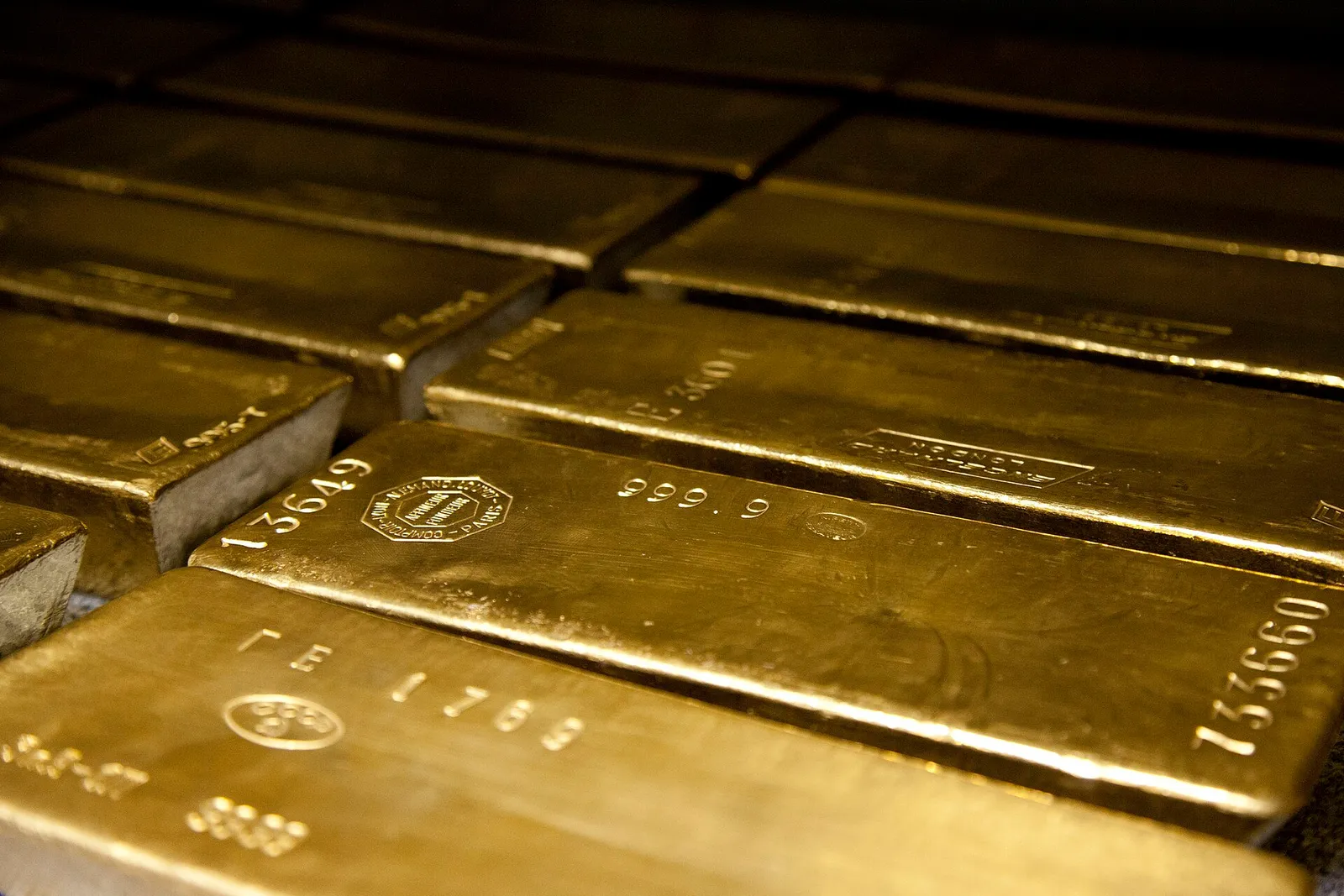
Gold slipped below $4,000 an ounce on Wednesday for the first time since November, a roughly $97 drop that handed the metal one of its sharpest single-day declines of the year. The move, tracked by FXEmpire, came as the U.S. dollar strengthened and traders pared back bets on near-term Federal Reserve rate cuts.
The move
Spot gold fell about 2.4% to breach the $4,000 mark, with futures recovering modestly toward $4,017 in later trading. The decline extends a pullback that has taken gold down roughly 12% over the past month, according to FXEmpire data, after a powerful rally earlier in the 2025–26 period. One technical gauge, the 14-day relative strength index, fell to around 16 — a reading often described as deeply oversold, per Investing.com — suggesting sellers were firmly in control.
Two forces pulling gold down
The selloff traces to a strengthening dollar and the prospect of higher-for-longer interest rates.
The U.S. Dollar Index, which measures the dollar against a basket of major currencies, was trading near 101.6 — around a one-year high, according to Yahoo Finance. At the same time, a run of firmer U.S. economic data has pushed investors to scale back expectations for Fed rate cuts, with the benchmark 10-year Treasury yield holding around 4.4%.
Why rates and the dollar move gold
Gold pays no interest and no dividend. When safe Treasury bonds yield 4% or more, holding gold means giving up that guaranteed return — so as rate expectations climb, the opportunity cost of owning gold rises and the metal becomes less attractive by comparison.
The dollar works through a separate channel. Gold is priced in dollars worldwide, so when the dollar strengthens, the metal becomes more expensive for buyers using euros, yen or other currencies, weighing on demand and pushing the dollar price down. The two forces tend to move together: expectations of a tighter Fed support the dollar, which is why both pressures hit gold at once on Wednesday.
Context: a record run cools
The drop follows one of the strongest stretches in gold's modern history. Over the past year the metal traded in a wide band — from around $3,244 to a record high above $5,600, per FXEmpire — as investors bought it as a hedge against geopolitical risk, as central banks diversified reserves away from the dollar, and as markets earlier anticipated Fed rate cuts.
That last support has now reversed. Coverage of a stronger-than-expected U.S. jobs report earlier in June marked a turn in sentiment as rate-cut hopes faded, and Wednesday's break below $4,000 is the latest leg of the correction. Whether the metal stabilizes or extends its slide will hinge largely on the Fed's next signals: gold has spent the past year taking its direction from the path of U.S. interest rates, and that has not changed.