Nvidia has notified customers that systems shipping in early 2027 will carry price increases of more than 15% in many cases, covering servers built around its Vera Rubin and Grace Blackwell chips. The size of the increase varies with the memory configuration of the system.
The notices went to the contract manufacturers that assemble servers for Microsoft, Google and Oracle, and to large data-center operators including Amazon and Meta. Nvidia did not respond to requests for comment.
The cause is upstream
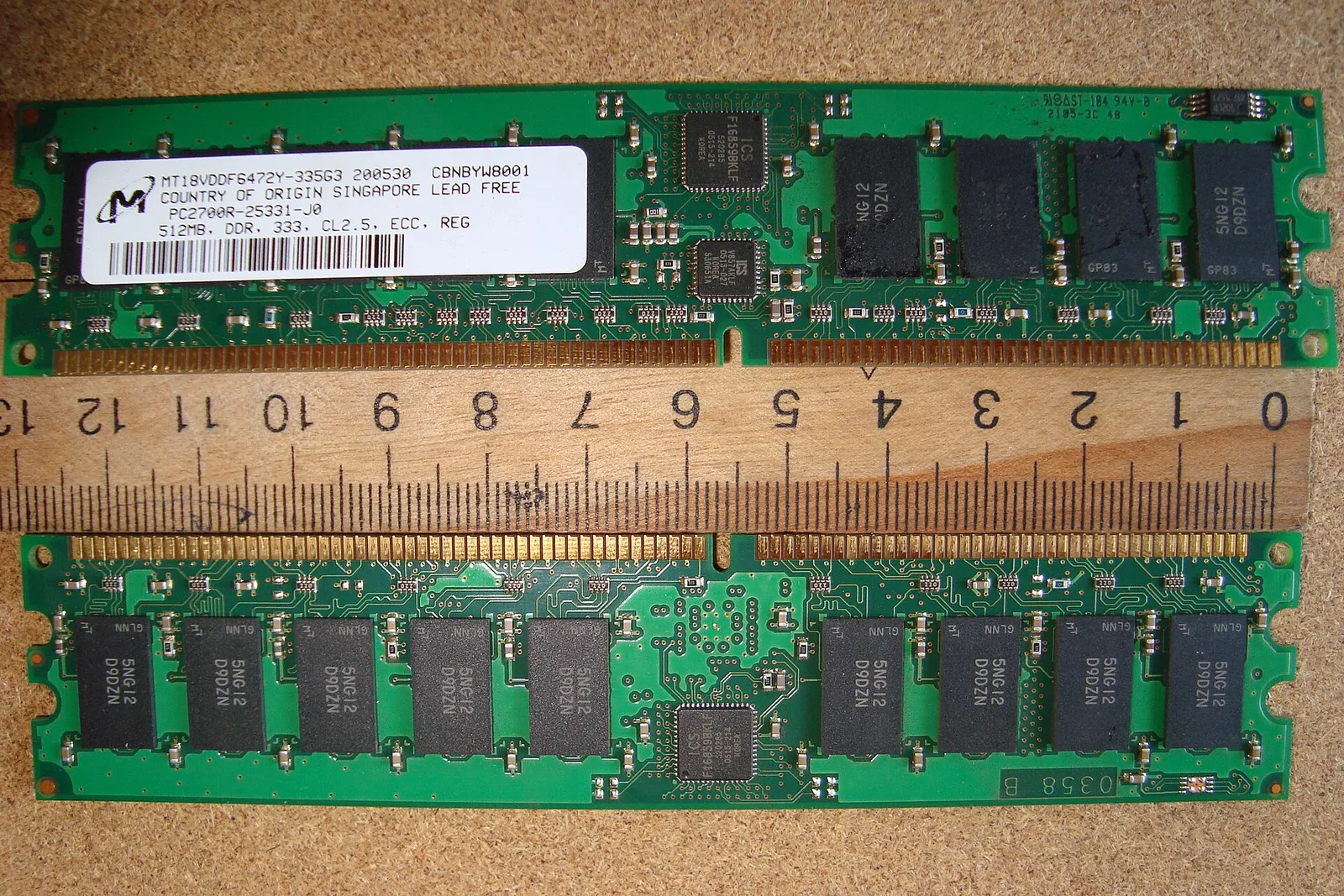
Memory. An AI accelerator is useless without a large quantity of high-bandwidth memory sitting beside it, and that memory has been the tightest part of the semiconductor market for more than a year.
Boursel reported on Friday that Samsung's second-quarter operating profit reached a record 89.5 trillion won, up 1,814% on the year, on the back of memory demand from AI data centers, and that the company has told investors the shortage could persist into 2028. SK Hynix announced a 40 trillion won buyback in the same week. Those are the profits of a supplier with pricing power, and this is what pricing power looks like two links further down the chain.
Samsung, SK Hynix and Micron between them account for most global DRAM production, which is why the constraint does not resolve quickly. Adding memory capacity means building fabs, and fabs take years.
What the pass-through says
Nvidia has been operating at a gross margin near 75%, which is exceptional for a hardware business and among the highest of any large company anywhere.
A firm with that margin has room to absorb a cost increase. Choosing to pass it through instead is a statement about demand: you raise prices into a market you believe will pay, and you absorb costs in one you are worried about losing. On the evidence of this notice, Nvidia does not think a 15% increase costs it any orders.
That reading is consistent with everything else visible. Boursel reported yesterday that nine companies carry roughly $3 trillion of off-balance-sheet AI purchase and lease commitments, much of it contracted rather than discretionary. Customers who have already signed are not well placed to object to a price increase.
Where the cost actually lands
Not on Nvidia, and not really on the hyperscalers either, at least not immediately. It lands in the capital cost of data centers being built through 2027, and from there in the price of cloud compute, and eventually in what enterprises pay to run AI workloads.
That matters because of what we published earlier today: an Atlanta Fed study finding that around 90% of executives report no productivity gain from AI at their companies yet. A technology whose measured benefit has not yet arrived is getting more expensive to deploy.
The two facts are not contradictory, and neither settles anything. But they sit on opposite sides of the same calculation that every enterprise buyer is now making.
The number to watch on Wednesday
Nvidia reports second-quarter results on Wednesday, having guided to about $91 billion of revenue with the consensus just inside that range.
The question this notice raises is not about the quarter. It is about the margin: whether Nvidia's own gross margin holds near 75% through 2027 as memory costs rise, or whether the price increase merely offsets the cost and the profitability plateaus. Management's guidance on that will say more about the shape of the cycle than the revenue line will.