
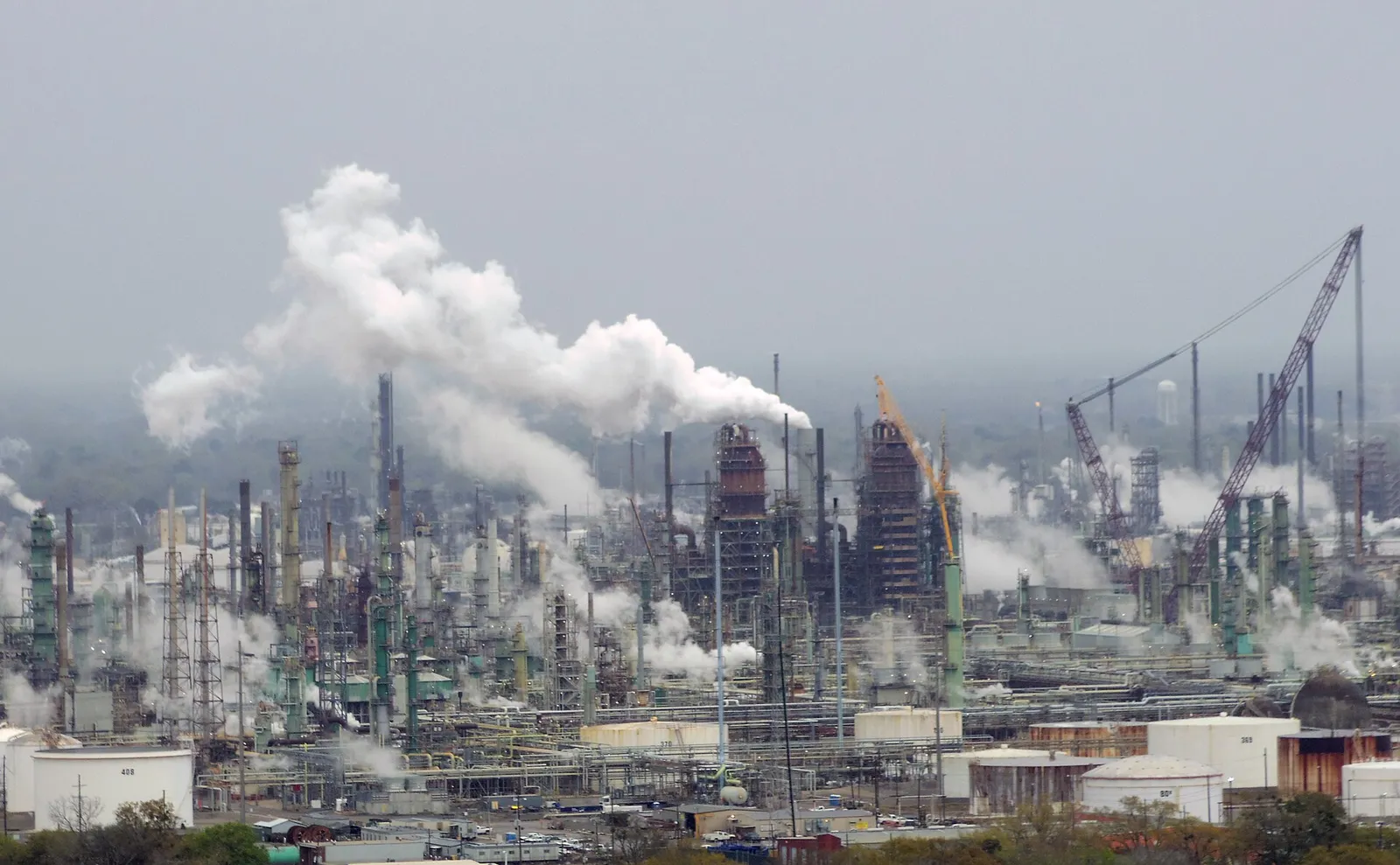
The most important number in energy markets right now is not the price of crude. It is the gap between crude and the fuel made from it, and that gap has never been wider.
The benchmark 3-2-1 crack spread rose to about $70 a barrel this week, the highest level on record, according to Bloomberg. Refining margins have roughly tripled since the start of 2026.
What a crack spread actually is
The term sounds like jargon but the idea is simple. A refinery buys crude oil and sells the products it makes from it, principally gasoline and diesel. The crack spread is the difference between what it pays and what it receives. The name comes from "cracking," the process of breaking heavy hydrocarbons into lighter, more valuable ones.
The industry standard benchmark is the 3-2-1 spread, which assumes three barrels of crude produce two barrels of gasoline and one of distillate such as diesel or jet fuel. These spreads are traded as futures on the CME, which lets refiners lock in a margin in advance.
Two things follow from this. First, a refiner's profitability depends on the spread, not the oil price: expensive crude is fine if fuel is proportionately more expensive, and cheap crude is no help if fuel is cheap too. Second, the crack spread is a gross margin, not a profit. It does not subtract the considerable cost of running a refinery, so the record spread does not translate one-for-one into record earnings.
The bottleneck moved downstream
What makes this episode distinctive is where the scarcity sits.
In a conventional oil shock, crude is the constraint and the crude price does the work. Here the constraint is refining: the ability to convert crude into the specific products people need. When refining capacity is short relative to demand for fuel, product prices rise faster than crude, and the spread widens. That is a different problem with different consequences, and it is why the crude price alone has been a poor guide to what drivers and hauliers are paying.
Several pressures have combined. The conflict involving Iran has disrupted flows through the Gulf, which matters for refining specifically because Middle Eastern grades are relatively rich in the middle distillates that make diesel and jet fuel. Separately, Russia, which supplies roughly a tenth of the world's diesel, has suspended exports, removing a large volume of finished product from the market rather than crude.
Diesel is where the strain concentrates, and diesel is the fuel that moves freight, powers farm equipment and runs generators. Gasoline shortages are visible at the pump; diesel shortages propagate through the price of nearly everything that travels by road.
Thin inventories leave no cushion
The squeeze arrives with unusually little slack in the system. The US Energy Information Administration, in an outlook published in March 2025, projected that combined inventories of motor gasoline, distillate fuel oil and jet fuel would end 2026 at 375 million barrels, which would be the lowest year-end level since 2000, when they finished at 358 million barrels. The agency attributed part of the decline to pending refinery closures reducing US production of refined products.
That forecast predates the current disruption, which is the point: the market was already expected to be tight before the supply shocks landed on top of it. Inventories are what absorb a shock. With little to draw down, price does the adjusting instead.
Who gains and who pays
The gain accrues to refiners, and to complex refineries in particular, meaning those able to process heavier or cheaper crude grades into high-value products. Independent US refiners including Valero, Marathon Petroleum and Phillips 66 are the most direct beneficiaries of wide distillate margins, though their reported results for the current quarter are not yet published and the eventual figures will depend on their individual crude slates, utilization and hedging.
The cost falls on everyone downstream. A wide crack spread is, definitionally, a larger wedge between the oil price and the pump price, so households and freight operators pay more even when crude is stable. For central banks watching inflation, a diesel-led fuel increase is awkward, because it feeds into goods prices broadly through transport costs rather than staying contained in the energy component.
A caution on extrapolating
Refining margins are among the more volatile and mean-reverting series in commodities. Records tend to be made in conditions of acute scarcity, and those conditions attract exactly the response that ends them: idle capacity restarts, maintenance is deferred, cargoes are rerouted toward the best-paying market.
Whether that happens in months or quarters here depends on things nobody can schedule, chiefly the course of the conflict and the restoration of damaged refining capacity. What can be said with confidence is that a $70 crack spread is not a normal state of the world, and that the market is currently paying an extraordinary premium for the simple act of turning oil into fuel.