Bozeman, Montana is a case study in a problem that has become common across the mountain west and in resort economies worldwide: what happens when money arrives somewhere faster than housing can be built for the people who already live there.
Since the pandemic, Bozeman's population has grown by about 20 percent, a very large increase for a town that had fewer than 50,000 residents in 2019, according to the BBC. Mark Corner, president of Southwest Montana Realtors, told the broadcaster that buyers arrived in numbers as people began "fleeing the Covid mess … on the East Coast and West Coast," and that local home values "jumped 40% in two years."
The mechanics of an amenity boom
The economics here are not mysterious, and they are not really about Montana.
When people who earn their income remotely can live anywhere, they bid for housing in places chosen for scenery and quality of life. Their wages are set by a national or global labor market; local housing supply is set by local constraints. The result is that incomes and house prices decouple, because the marginal buyer of a Bozeman house is no longer someone earning a Bozeman wage.
Montana added a second attraction on top of the landscape. The state has for years drawn people who value its emphasis on self-reliance, and it levies no sales tax, no luxury tax and no inheritance tax. Jeff Michael, director of the Bureau of Business and Economic Research at the University of Montana, also pointed to the pull of the television drama Yellowstone, saying that people in the state believe the show "had an impact on the housing market." That is a claim about perception rather than a measured effect, but the underlying mechanism, places becoming desirable faster than they can expand, is well documented.
Supply cannot respond quickly. Buildable private land in mountain valleys is limited, with much of the surrounding terrain federal or under conservation easement. Construction costs are high and the season is short. And where development is possible, builders face an obvious incentive: land that can support expensive houses will be used for expensive houses.
The squeeze on the people who staff the town
The distributional consequence is what makes this an economic story rather than a real estate one.
Bozeman Mayor Joey Morrison, elected at 28 on a platform focused on affordable housing, described watching rents "double or triple in the span of a year or two," and a town where "every coffee shop is full of people coding on their computer or working for an organisation that has never stepped foot in the state of Montana."
A resort or amenity economy runs on labor that is paid local wages: hospitality, retail, health care, construction, schools. When housing costs are set by outside incomes, those workers are pushed into long commutes or out of the area, and employers face persistent shortages in exactly the jobs the local economy depends on. The businesses serving newcomers become harder to staff because of the newcomers.
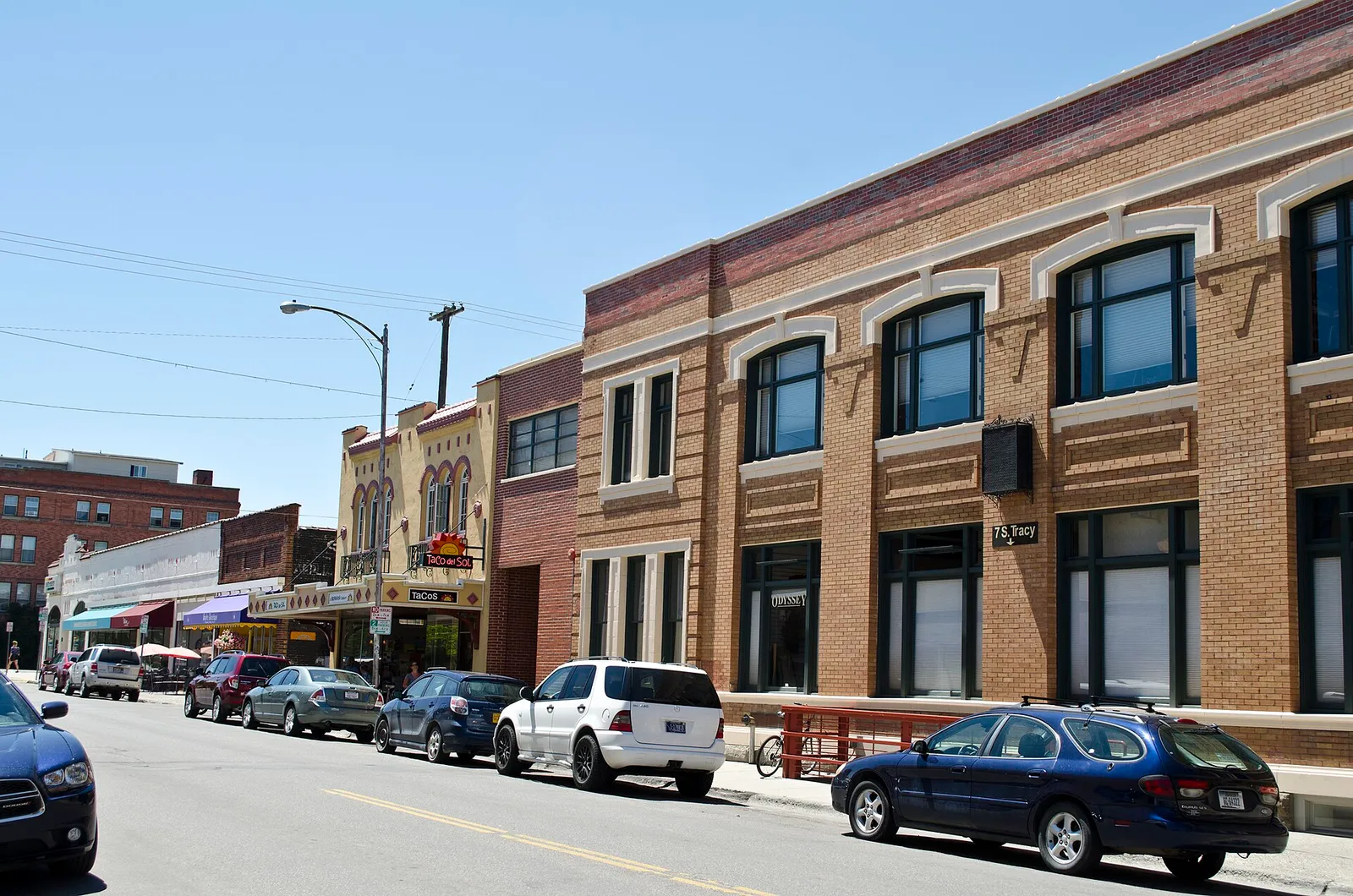
The physical fabric changes with it. Downtown small businesses in Bozeman have given way to steakhouses, high-end retail chains and shops selling custom cowboy hats to tourists, and the town's first Whole Foods opened in 2023.
Mobile homes are the last rung
The most consequential detail is the one in the BBC's headline: a recent rent strike by residents of two mobile home parks.
Mobile home parks occupy a specific and fragile position in the housing market. They are typically the cheapest non-subsidized housing available, and their residents are in an unusual bind: they often own the home but rent the land beneath it. That inverts the normal protections of ownership. When the ground rent rises, a homeowner cannot simply move, because relocating a mobile home is expensive and frequently impossible if no other park has a vacancy. The asset they own is immobile in practice while the cost they cannot control keeps rising.
Sara Folger, who works part-time at that Whole Foods, has lived in the Mountain Meadows park for 17 years and remembers a Bozeman of "back-to-the-land hippies, college students, cowboys and ski bums." Her situation is an illustration rather than a statistic, but the structural point generalizes: when land under a park becomes more valuable for redevelopment than as park land, the economics push toward sale, and the residents have the least ability to absorb the result.
Why this matters beyond Montana
The pattern recurs wherever a place becomes desirable faster than it can build: in ski and coastal towns across the United States and Europe, and in cities that attract high earners into constrained housing stock.
It also produces a genuine policy dilemma rather than an obvious villain. Rising property values represent real wealth for existing owners and a growing tax base for local government, while simultaneously pricing out renters and burdening longtime owners on fixed incomes with higher assessments. Growth is not the problem, and neither is investment. The problem is that the housing supply cannot move at the speed of the money, and the people with the least capacity to wait are the ones the local economy needs most.