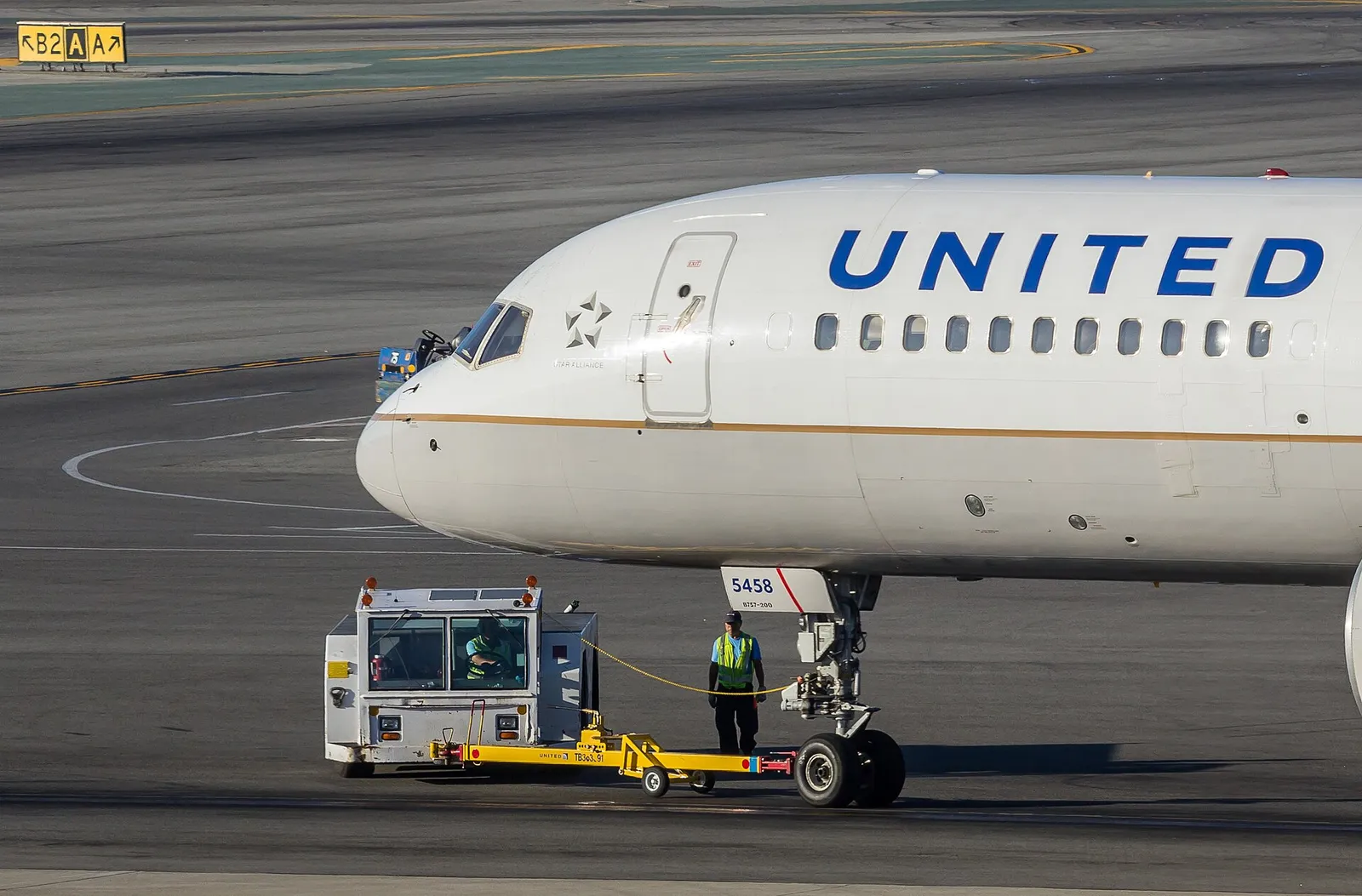
The interesting thing about United Airlines' second quarter is not that revenue rose. It is that the airline raised fares into a fuel shock and passengers paid.
Operating revenue climbed 16 percent to $17.7 billion as fuel costs rose amid the US-Iran conflict, according to Fortune. "Demand is strong," chief executive Scott Kirby told analysts, adding that United is "using today's environment to accelerate our investments in all aspects of the customer experience from nose to tail."
The number that carries the argument
United has not said how much it raised fares. The flight search engine Skiplagged found prices rose 35 percent on popular domestic routes and 15 percent on international ones this summer, figures reported by the New York Times.
The more revealing split is inside the cabin. Revenue from United's high-end seats rose 16 percent year over year, against 11 percent growth in basic economy revenue. The premium end grew half again as fast as the cheap end, during a quarter when fares were rising. That is the definition of pricing power: a customer segment that absorbs increases rather than trading down or staying home.
Delta shows the same pattern, with premium revenue up 17 percent, outpacing its overall growth.
Why a minority of seats carries the economics
The logic of premiumization rests on a simple asymmetry that is easy to miss.
Premium seats occupy more floor area, so an aircraft configured with more of them carries fewer passengers. But the revenue per seat is several multiples of an economy fare, and the incremental cost of flying a premium passenger, mostly fuel for a bit more weight plus better catering, is small next to that. So a minority of seats can generate a disproportionate share of the revenue on a flight, and an even larger share of the profit.
That changes what an airline optimizes for. A carrier chasing volume fills seats and competes on price, which is a commodity business with famously poor returns. A carrier chasing premium revenue competes on product and loyalty, where customers are less price-sensitive because someone else is often paying, or because the trip matters enough to justify the cost.
Both United and Delta have spent years building toward the second model, with better cabins, upgraded lounges, upgrade access and baggage waivers, and both have leaned on loyalty programs, which are highly profitable businesses in their own right through co-branded credit card economics.
Capacity discipline is doing part of the work
One caveat belongs alongside the strategy, because it is easy to credit premiumization for a result that also has a simpler cause.
Major US airlines have reduced capacity and cut flights, which supports pricing power directly. Fewer seats chasing the same demand raises fares regardless of how good the cabins are. Some of the pricing strength in this quarter reflects that discipline rather than any change in what passengers are willing to pay for a lie-flat seat.
The two effects are hard to separate from outside, and both are real.
The competitive arms race
The rivalry is now about the product itself. Delta is testing aircraft in which the majority of seats are premium, an aggressive reading of where demand is heading. United has said it will offer Wi-Fi supported by Starlink on 1,000 of its planes by year-end, while Delta has chosen Amazon's satellite service, telling Fortune that its mix of entertainment and shopping options made it the more attractive partner.
Connectivity is a sensible place to compete, since it is one of the few improvements every passenger notices immediately, and it is far cheaper per seat than reconfiguring a cabin.
What would break it
The strategy has an obvious dependency: the premium customer.
Premium demand is tied to corporate travel budgets and to affluent leisure spending, both of which are cyclical and both of which fall faster than economy demand in a downturn. An airline that has shifted its fleet toward premium seats has also concentrated its exposure to that segment, and cabins cannot be reconfigured quickly when conditions change.
Rising fuel costs make the calculus tighter still. For now the passing-through is working, and United is investing into it rather than retrenching. The test comes when demand softens rather than when costs rise, because this quarter has shown the airline can handle the second.