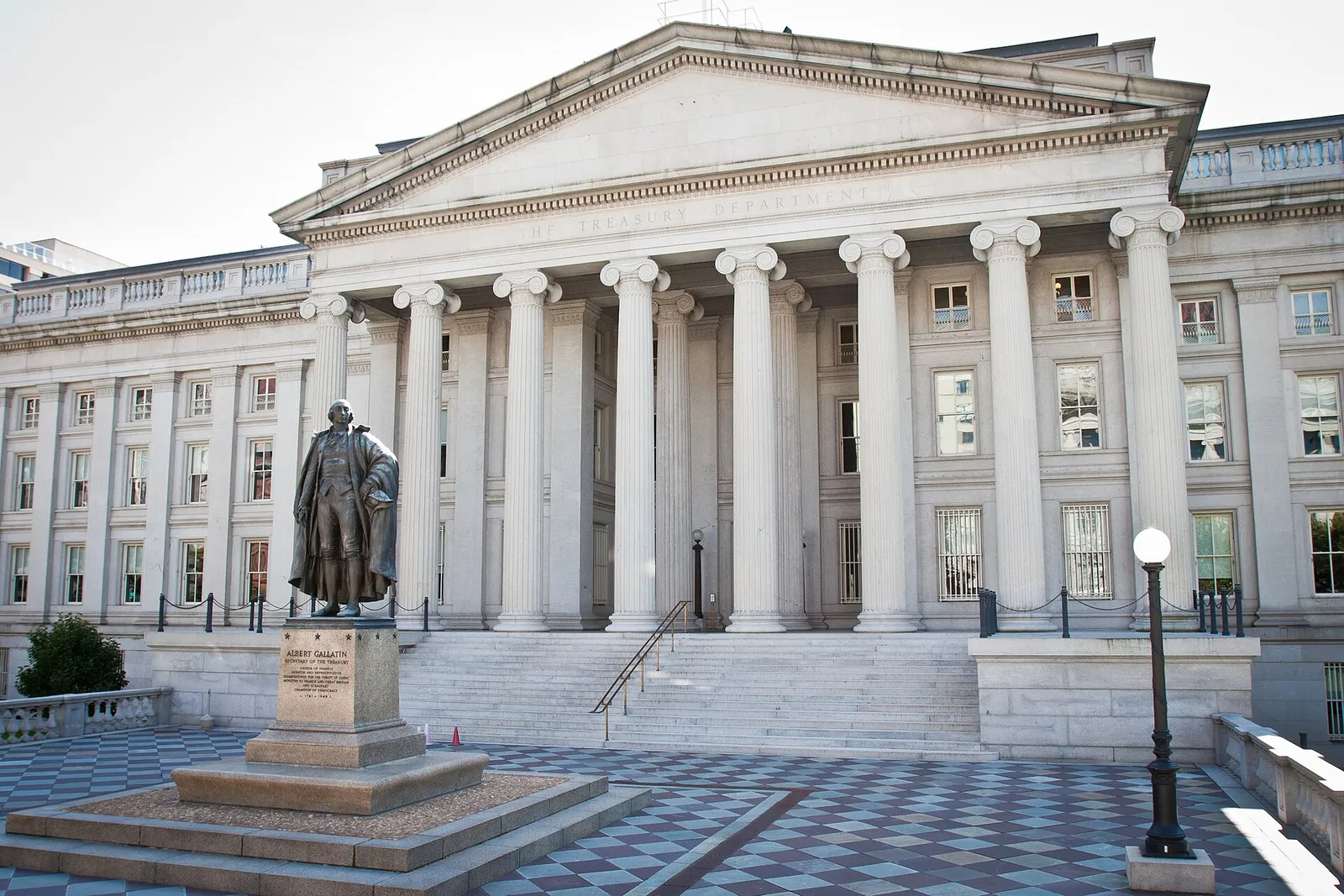
On Wednesday the Treasury said it would double its buybacks of long-dated government debt, from $2 billion to at least $4 billion per operation, starting on September 9. Yields fell on the announcement. They have since gone straight back up.
The 10-year Treasury yield rose to 4.74% on Friday and the 30-year to 5.28%, both testing the 20-month highs set earlier in the week. The 30-year had reached its highest level in nearly two decades immediately before the buyback was announced, retreated briefly, and climbed back to where it started.
What a buyback is, and what it is not
The Treasury buys back existing bonds from investors, paying cash for debt it has already issued. It is a liquidity operation: it gives holders of older, less traded bonds a way out, and supports the price of the ones it purchases, which lowers their yield.
What it is not is a reduction in borrowing. Every dollar spent buying a bond back has to be raised by issuing another, and the Treasury is doing this against a deficit projected at around $2 trillion this fiscal year in a market of roughly $32 trillion in outstanding debt. Buying $4 billion of long bonds while running that deficit changes which bonds exist, not how many.
That distinction is the whole argument. The Treasury presents the operation as market plumbing. A growing number of investors are reading it as an attempt to hold long-term yields down by official action, which is a different thing, and one with a history.
The case against
Robin Brooks of the Brookings Institution, previously chief economist at the Institute of International Finance, made the criticism most directly, saying the US "is playing with fire with this buyback". His argument is mechanical rather than rhetorical: when a government caps yields without fixing the deficit underneath them, investors who are no longer paid the risk premium they want do not simply accept less. They sell the currency instead.
The reference point is Japan, which held long-term yields down for years and watched the yen fall a long way over the same period, with a debt burden now above 200% of GDP. Brooks's point is that a currency, once it starts down that path, is very hard to stabilise.
The market's behaviour this week is at least consistent with that reading. The dollar has weakened, gold has risen to the top of its range, and bitcoin has had its best week since 2023, a combination Wall Street has taken to calling the debasement trade. Those are the assets people buy when they are worried about the currency rather than about growth.
Not everyone goes that far. Jonas Goltermann of Capital Economics was more measured, though he noted that if the stream of unconventional policy ideas continues, his assessment may change. Lawrence Gillum of LPL Financial read it more benignly, saying the operation is a reminder that the Treasury is paying attention and will do what it can to stop yields rising too fast. Demand at bond auctions has remained adequate throughout.
Why this matters outside the bond market
Because the long end of the Treasury curve prices almost everything else.
Boursel has reported this week that mortgage rates dipped to 6.65% on the buyback news and that the relief did not survive the week; that technology companies are now paying wider spreads to fund data centres; and that the equity market fell 703 points on the Dow on a day when yields rose alongside a weak Walmart quarter. Each of those is the same 30-year yield showing up in a different place.
For the Federal Reserve the timing is awkward. Inflation is running near 3.5%, three members dissented in July in favour of a further rate increase, and then payrolls fell in the July report. Now the Treasury is intervening at the long end while the Fed decides what to do at the short end, and the two are not coordinated by design: the Fed sets policy rates, the Treasury manages debt issuance, and the separation is supposed to be the point.
Kevin Warsh gives his first Jackson Hole address as Fed chair next Friday. Whether he says anything about the Treasury's operations, and how carefully he says it, is now one of the more consequential questions of the week.