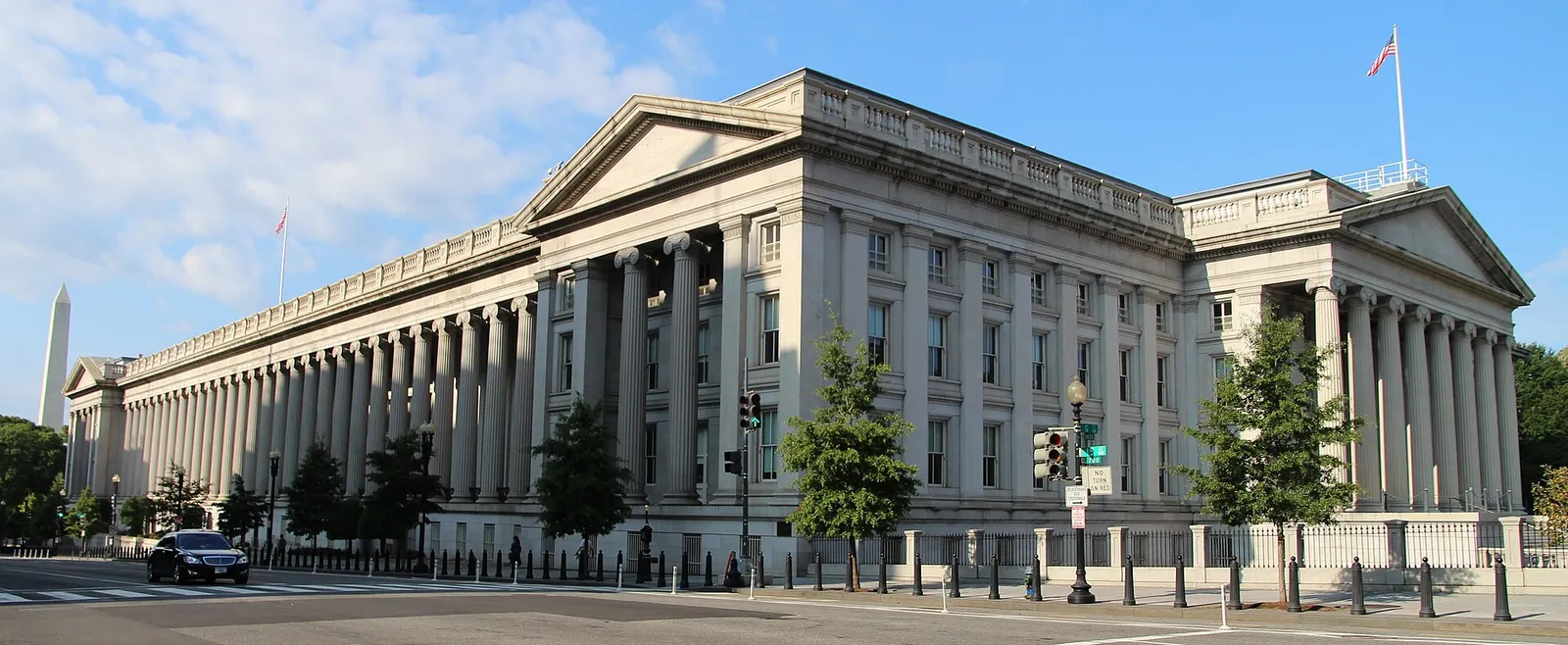
A crypto crackdown that once would have taken weeks played out in minutes this week — a case study in how digital-asset sanctions actually work.
On July 1, the U.S. Treasury's Office of Foreign Assets Control (OFAC) added 134 cryptocurrency wallet addresses linked to ISIS-K — the Islamic State's regional affiliate in Afghanistan, Pakistan and Central Asia — to its sanctions list, Chainalysis reported. The addresses were 131 on the Tron network and 3 in Monero, and had collectively received more than $1.4 million in crypto since 2023 and sent out over $880,000. Within minutes, stablecoin issuer Tether froze the balances on all 131 Tron addresses, Cointelegraph reported.
How crypto sanctions work
OFAC is the arm of the U.S. Treasury that enforces sanctions. When it targets a bank, it can freeze accounts; in crypto, it adds specific wallet addresses to its blacklist. That doesn't erase the wallet — no one can delete an entry on a public blockchain — but it makes it illegal for U.S. persons and regulated firms (exchanges, issuers) to transact with those addresses, and it flags the funds as sanctioned. (A wallet address is like an account number on a blockchain — a public string that holds and moves crypto.)
Why Tether can freeze money
Here's the part that surprises people new to crypto: a stablecoin issuer can simply switch the money off. Tether's USDT is a centralized stablecoin — Tether Limited controls the smart contract that runs the token. That lets it blacklist an address: the wallet still shows the tokens, but they can't be moved. So when OFAC named the Tron addresses, Tether — which has an automatic process to act on sanctions — froze the USDT on them almost instantly. (A stablecoin is a crypto token pegged to a currency like the dollar; a centralized one has a company that can control it.)
The Monero addresses are a different story. Monero is a privacy coin with no central issuer to freeze anything, so enforcement there falls back on stopping the funds when someone tries to cash out at a regulated exchange — slower and less certain.
The tension it exposes
The episode captures a core paradox of modern crypto. The technology was built to be permissionless — money no government or company could block. But the rise of centralized stablecoins has quietly reintroduced exactly that control: with so much on-chain activity flowing through USDT and USDC, their issuers have become gatekeepers who can freeze funds in real time. For fighting terrorism financing, that's a powerful tool — far faster than the traditional banking system. But it also means a private company can render your holdings unusable, with no court and no appeal. The same power that stops ISIS-K also concentrates enormous authority in a handful of issuers.
Why it matters
For crypto, the freeze is more evidence that the sector's "unstoppable money" ideal has bent to reality: the most-used dollar tokens are controllable, and increasingly used as an arm of law enforcement. For regulators and compliance, it validates a model — designate on-chain, and let issuers enforce — that makes stablecoins a surprisingly effective sanctions instrument, reinforcing why governments are keen to bring them under formal rules. And for users, it's a plain-English warning that a centralized stablecoin is only as free as its issuer allows: convenient and liquid, but not censorship-proof. Boursel takes no position beyond the facts; the takeaway is that in the crypto era, cutting off a terrorist group's money can now happen at the speed of a blockchain — because the money itself has a company behind it.