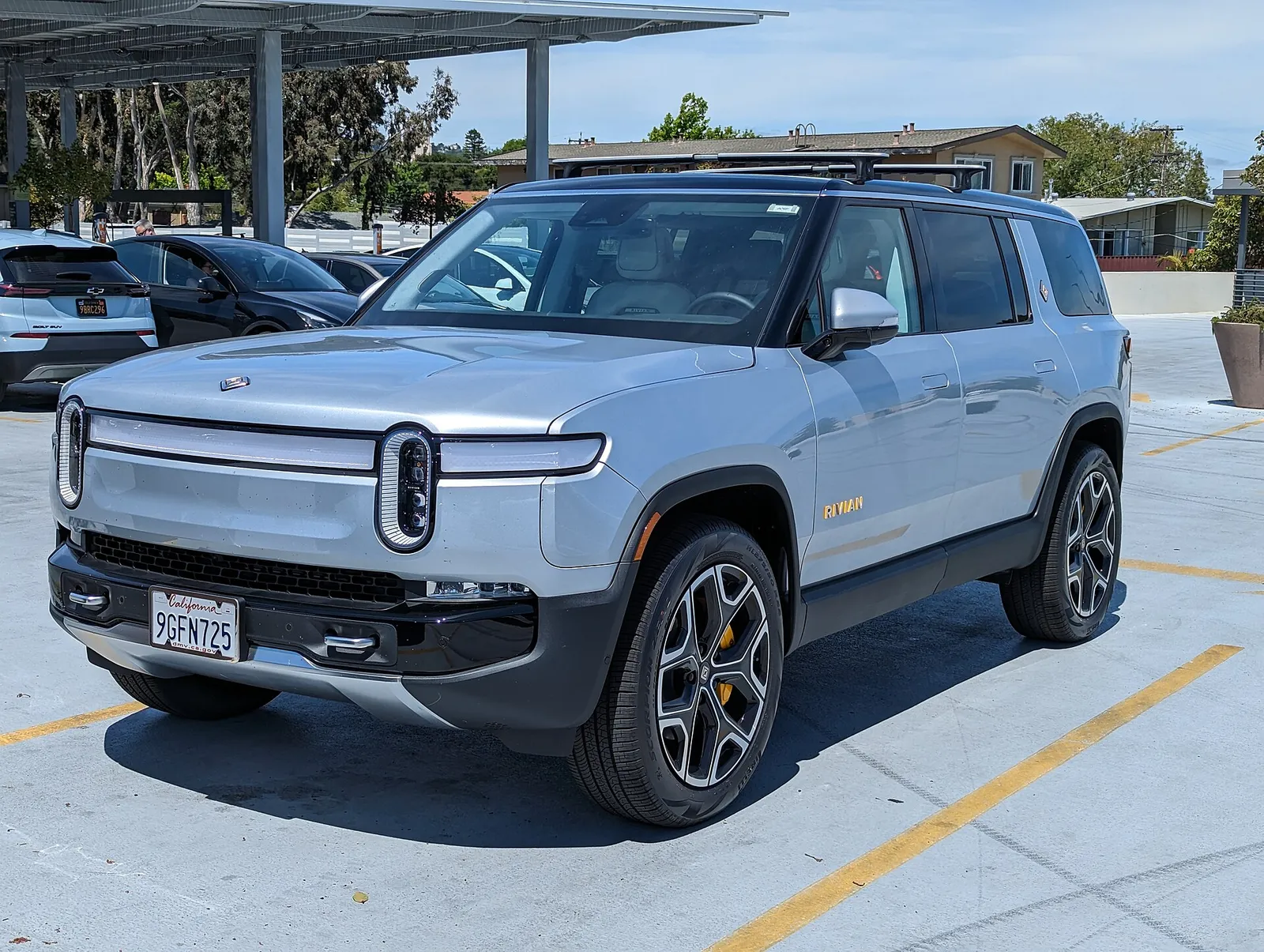
Rivian gave investors a rare piece of good news on Wednesday: it now expects to sell more electric vehicles this year than it previously guided, after a second quarter that ran ahead of its own targets.
The company delivered 12,194 vehicles in the three months to June 30 and produced 12,613 at its plant in Normal, Illinois, TechCrunch reported — comfortably above the 9,000-to-11,000 range Rivian had forecast for the quarter. On the strength of that, it raised its full-year 2026 delivery guidance to 65,000–70,000 vehicles, up from 62,000–67,000, according to Yahoo Finance.
The R2 is the story
What makes the quarter significant is why demand improved: it marks the arrival of the R2, Rivian's smaller, cheaper SUV and the vehicle the company has staked its future on. Rivian's first models — the R1T pickup and R1S SUV — are premium products that start well above the price most buyers will pay. The R2 is meant to change that, starting at $57,990 for a dual-motor, all-wheel-drive version with a 330-mile range, InsideEVs reported. It is still not a budget car, but it is a meaningful step down in price, and it is the model that has to sell in large numbers for Rivian to reach the scale it needs.
Chief Executive RJ Scaringe framed the quarter as a turning point, calling it a "key inflection" for demonstrating "the long-term profitability of the business with R2," per Yahoo Finance. For a company that loses money on every vehicle it builds, volume is the path to viability: fixed costs like factories and engineering get spread over more cars, lowering the cost of each one.
The risk sits in the supply chain
Scaringe was candid about what could go wrong. The biggest risk to the R2 ramp, he said, is "the complexities of ramping a supply chain" and "the unknowns within the supply chain" — the intricate web of parts and suppliers that a new, higher-volume model depends on. Rivian has also signaled that the early phase of R2 production will weigh on gross margins until manufacturing becomes more efficient, a normal pattern when automakers launch a new platform. (Gross margin is what's left of revenue after the direct cost of building the product; a new model is expensive to make at first.)
Where the rivals stand
Rivian's closest U.S. peer in premium EVs, Lucid Motors, has not yet reported its second-quarter deliveries. Lucid delivered 3,093 vehicles in the first quarter and suspended its full-year guidance in May pending a strategic review under new leadership — a reminder of how uneven the young EV industry remains, with Tesla dominant and the challengers still fighting for scale.
Why it matters
For Rivian and its investors, raising guidance is a confidence signal that the R2 launch is landing — the single most important variable in the company's story. For the broader EV market, it is evidence that demand for electric vehicles is real when the price is right, even as some rivals stumble. And for buyers, the R2's arrival widens the field of longer-range electric SUVs in the mid-price tier. Boursel gives no investment advice; the takeaway is that Rivian cleared a low bar it set for itself and lifted its target for the year — but the hard part, turning a cheaper SUV into profitable volume, is only just beginning.