The federal government has put the robotaxi industry on notice over a basic but dangerous problem: driverless cars getting in the way of emergency responders. The head of the National Highway Traffic Safety Administration (NHTSA), the US agency that regulates vehicle safety, said companies must quickly address a "clear pattern" of autonomous vehicles interfering with police and other first responders, as US News reported.
What the regulator said
In a letter to the industry, NHTSA administrator Jonathan Morrison said the agency had documented multiple cases of self-driving vehicles driving into active emergency scenes, blocking the paths of ambulances and fire trucks, or failing to recognize and respond to "basic safety conditions like flashing lights, flares, smoke, fire, and traffic cones," US News reported. An "autonomous vehicle" is a car that drives itself using cameras, sensors and software, with no human at the wheel.
The move stops short of a formal new rule. It is a demand that companies come to the agency and explain how they will fix the problem, TechCrunch reported. But the framing, that a vehicle which cannot safely deal with first responders is a danger to the public, signals that tougher action could follow if the industry does not respond.
The problem, in practice
The concern is not hypothetical. San Francisco's fire chief has documented dozens of instances, reportedly 55 in a single year, of robotaxis interfering with emergency responses, and video has shown driverless cars blocking an ambulance and rolling through an active police scene. A particular failure mode is the "freeze": when a vehicle encounters something it cannot interpret, such as an officer waving traffic through or an unusual scene, it can simply stop and sit, turning a moving car into an obstacle.
The scale of that weakness was exposed during a December 2025 power outage, when more than 1,500 Waymo vehicles became confused at once and overwhelmed the company's remote-assistance system, according to details cited in the regulator's account. It is the kind of edge case a human driver handles on instinct but that autonomous systems must be explicitly engineered to manage.
Waymo in the frame
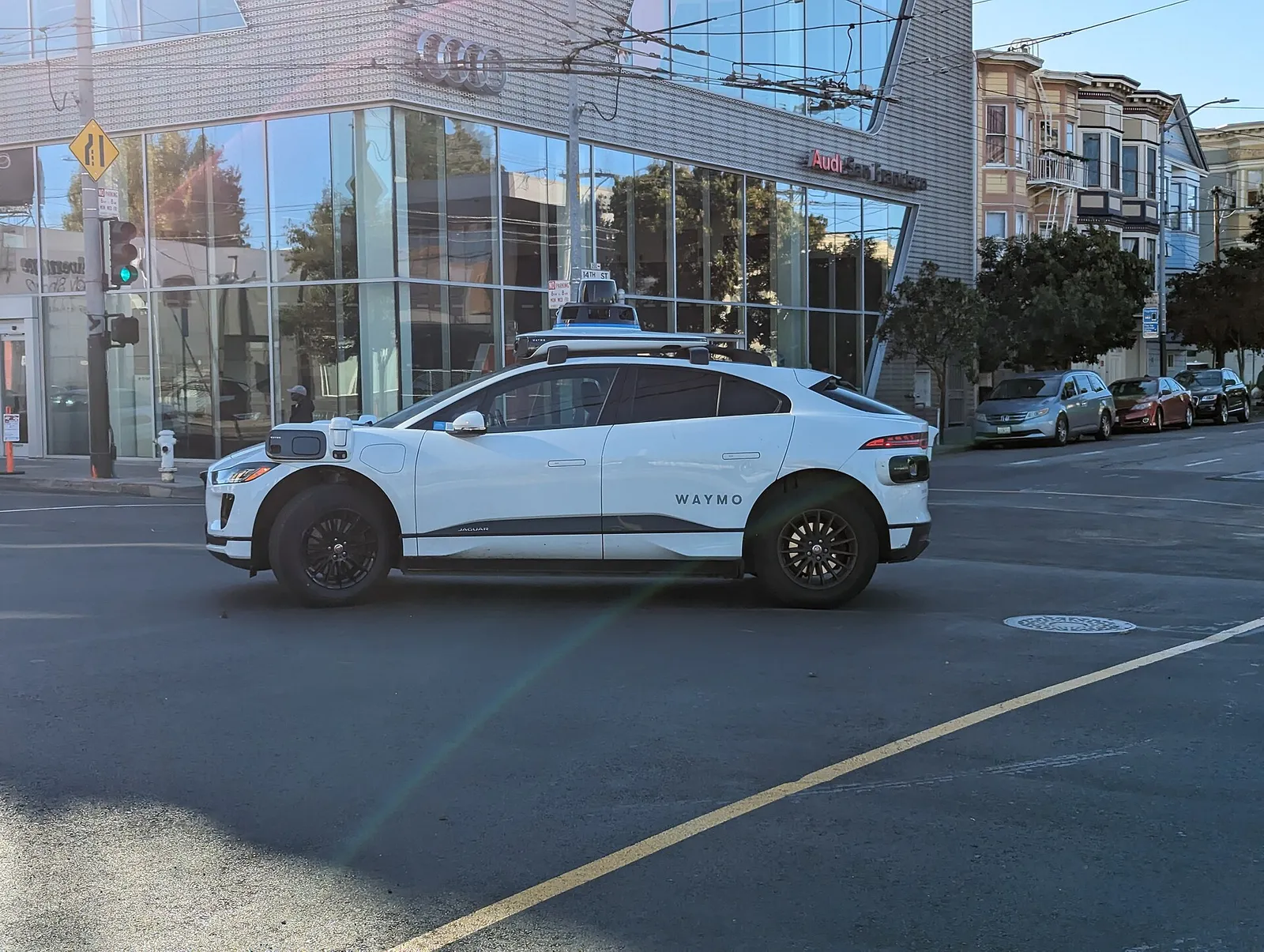
NHTSA's letter went to the industry broadly, but Waymo, the Alphabet-owned company that runs the largest US robotaxi fleet, is central to the story. Both NHTSA and the National Transportation Safety Board are investigating incidents involving Waymo vehicles, including cases where cars passed stopped school buses with their lights flashing, a violation of traffic law that prompted an earlier software recall.
Why it matters
For the robotaxi business, safe interaction with emergency services is not a nicety; it is a precondition for scaling. Waymo already operates in cities including San Francisco, Los Angeles, Phoenix and Austin, and rivals such as Tesla and Zoox are pushing toward commercial service. If federal regulators conclude the industry cannot reliably handle emergencies, the tools available range from mandated fixes to recalls and limits on expansion, any of which would slow a sector that has been growing quickly. The message from Washington is that the technology's hardest test is not the open road but the chaotic, unscripted emergency scene. This article is informational and not investment advice.