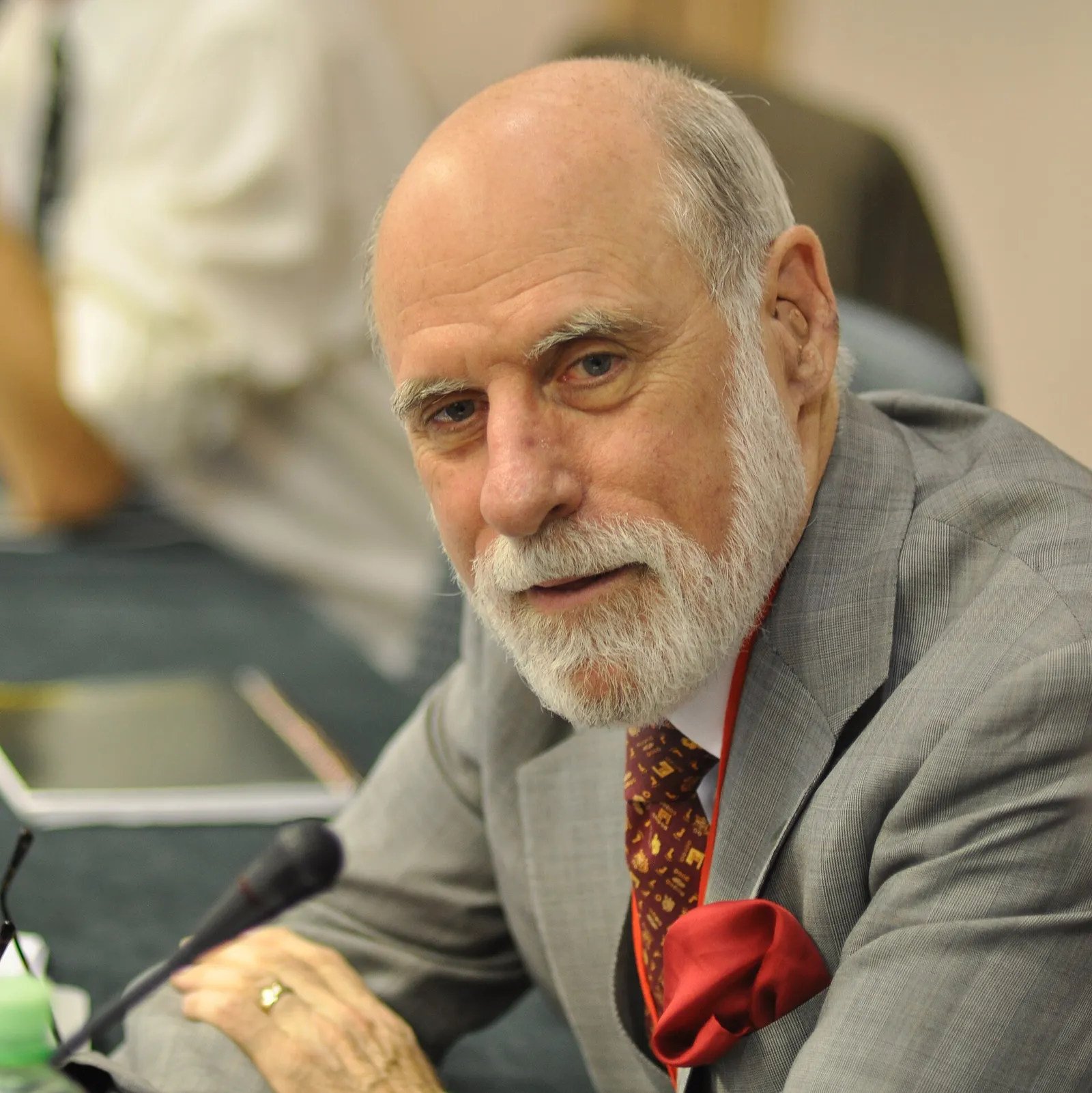
One of the people who made the modern internet possible is stepping back. Vint Cerf, 83, is retiring from Google, where he spent more than 20 years as its "chief internet evangelist," TechCrunch reported. It's a small personnel change with a large symbolism: a founding architect of the internet is bowing out as the network enters its AI age.
What he actually built
In the 1970s, Cerf and Robert Kahn designed TCP/IP — the Transmission Control Protocol / Internet Protocol — a set of rules that solved a deceptively hard problem: how to get different, incompatible computer networks to talk to one another reliably. That work is why we call him, alongside Kahn, a "father of the internet."
Think of TCP/IP as the internet's postal system. IP is the addressing — it figures out how to route a packet of data to the right place anywhere on Earth. TCP is the delivery guarantee — it makes sure the pieces arrive, in order, and nothing is lost. Every email, video call, web page and financial transaction you make travels on top of these rules. They are the plumbing beneath the entire digital economy.
A life at the internet's core
Cerf's career traces the internet's whole arc. He worked on the research that grew out of ARPANET, the US defense network that preceded the internet; managed protocol development at the defense research agency DARPA; and later helped build one of the first commercial email services. For his TCP/IP work, he and Kahn won computing's top prize, the Turing Award (2004), and the Presidential Medal of Freedom (2005), per the Internet Hall of Fame. He also helped govern the internet — co-founding the Internet Society and chairing ICANN, the body that oversees domain names — working to keep the network's core independent of any single government or company.
Why his exit resonates now
Cerf's retirement marks the founding generation stepping back — and the internet they built on principles of openness, interoperability and shared control looks very different today. The modern web is concentrated: a handful of giant companies dominate traffic, data and attention. Governments increasingly wall off their slices of it. And now artificial intelligence is rewiring how information is created and flows across it.
Cerf has been a candid voice on these tensions — arguing for an open internet and warning about the risks of centralization. His departure lands exactly as the industry debates how the open protocols of the 1970s should evolve in an era of AI, surveillance and platform power.
Why it matters
For Boursel's readers, this isn't nostalgia — it's infrastructure. The internet is the backbone of the global economy: every app, marketplace, bank and connected device runs on the foundation Cerf helped lay. His legacy is the reminder that today's trillion-dollar digital businesses sit atop a non-commercial, open standard built to share information and survive failure — not to be owned. As the founders who insisted on that openness retire, the open question they leave behind is whether the internet's next era keeps those values, or trades them away. In Cerf's own recurring phrase about the work of building the internet: "We still have a lot of work to do."