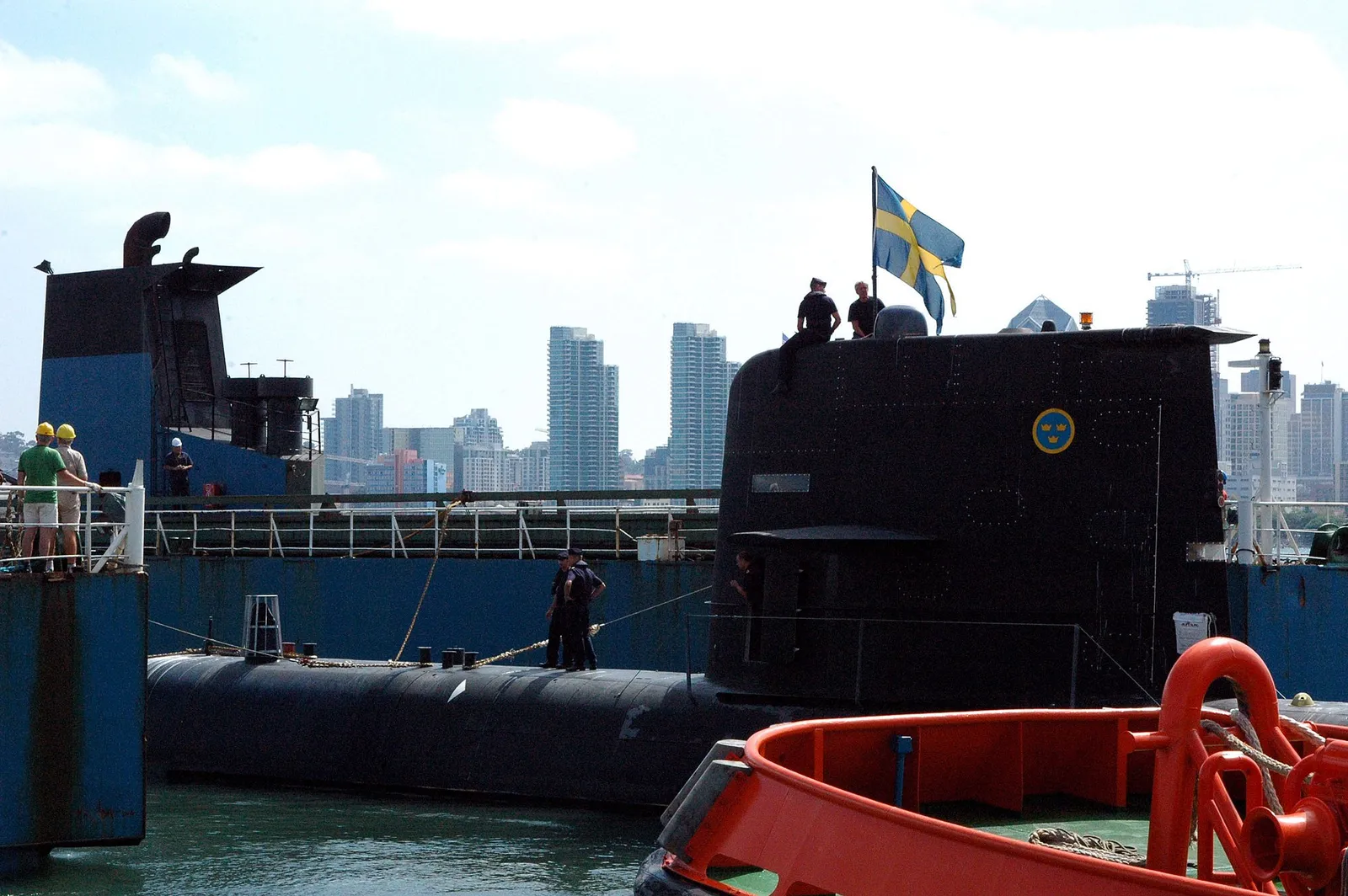
Europe's rush to rearm just produced one of its largest deals of the year. Poland has signed a contract worth about $4.8 billion (roughly 47 billion Swedish kronor) with Sweden's Saab to build three A26 submarines for the Polish navy, Defense News reported. The agreement, signed Monday in the Baltic port of Gdynia, is among the most significant European defense procurements of 2026.
The deal
The three boats — modern, diesel-electric A26 submarines built by Saab's Kockums shipyard — will replace Poland's aging Soviet-era submarine fleet, with deliveries running toward 2038, per Breaking Defense. The contract bundles in weapons and long-term training and support. Saab also said it would invest in Poland — on the order of €100 million — and work with the Polish state defense group PGZ to set up local maintenance and technology facilities, bringing work to Polish industry.
Officials framed it as a milestone. Swedish Prime Minister Ulf Kristersson called it "a very large and long-term deal," while Saab chief executive Micael Johansson tied it to "enhancing security in the Baltic Sea region." (Quotes per the cited reporting.)
Why it matters: the rearmament wave
The order is a symptom of a broader, structural shift. Since Russia's full-scale invasion of Ukraine in 2022, European countries — especially those near Russia — have ramped up military spending at a pace not seen in decades. Poland now spends roughly 4.7%–4.8% of its GDP on defense, the highest share in NATO, ahead even of the United States, and has been on an arms-buying spree spanning tanks, rockets and air defense.
The numbers are striking. EU defense budgets have climbed from about €218 billion in 2021 to an expected €381 billion in 2025, according to European Parliament research — and at their 2025 summit, NATO members agreed to push defense-and-security spending toward 5% of GDP by 2035. The Baltic states are leading the charge, modernizing fleets and forces that until recently leaned on Cold War-era equipment.
The market angle
For investors, the rearmament theme has been one of the most powerful in European equities. Shares of major defense contractors — Saab, Germany's Rheinmetall, Britain's BAE Systems, Italy's Leonardo and France's Thales — have risen sharply over the past two years as orders pour in. A multibillion-dollar, multi-decade contract like Poland's adds visible, long-dated revenue to Saab's order book, the kind of backlog that underpins the sector's re-rating.
The bigger picture
The Polish submarine deal is less a one-off than a marker of a continent rebuilding military capacity it had let atrophy in the post-Cold-War decades. For Saab, it's a flagship win and a deeper foothold in a frontline NATO market. For investors, it reinforces a thesis Boursel will keep tracking: European defense spending looks like a structural, multi-year build-out, not a temporary spike — with the contractors that supply the hardware among its clearest beneficiaries. The caveat, as ever with defense programs, is execution: big, decade-long shipbuilding contracts can slip on cost and schedule, and the revenue arrives over many years, not at once.