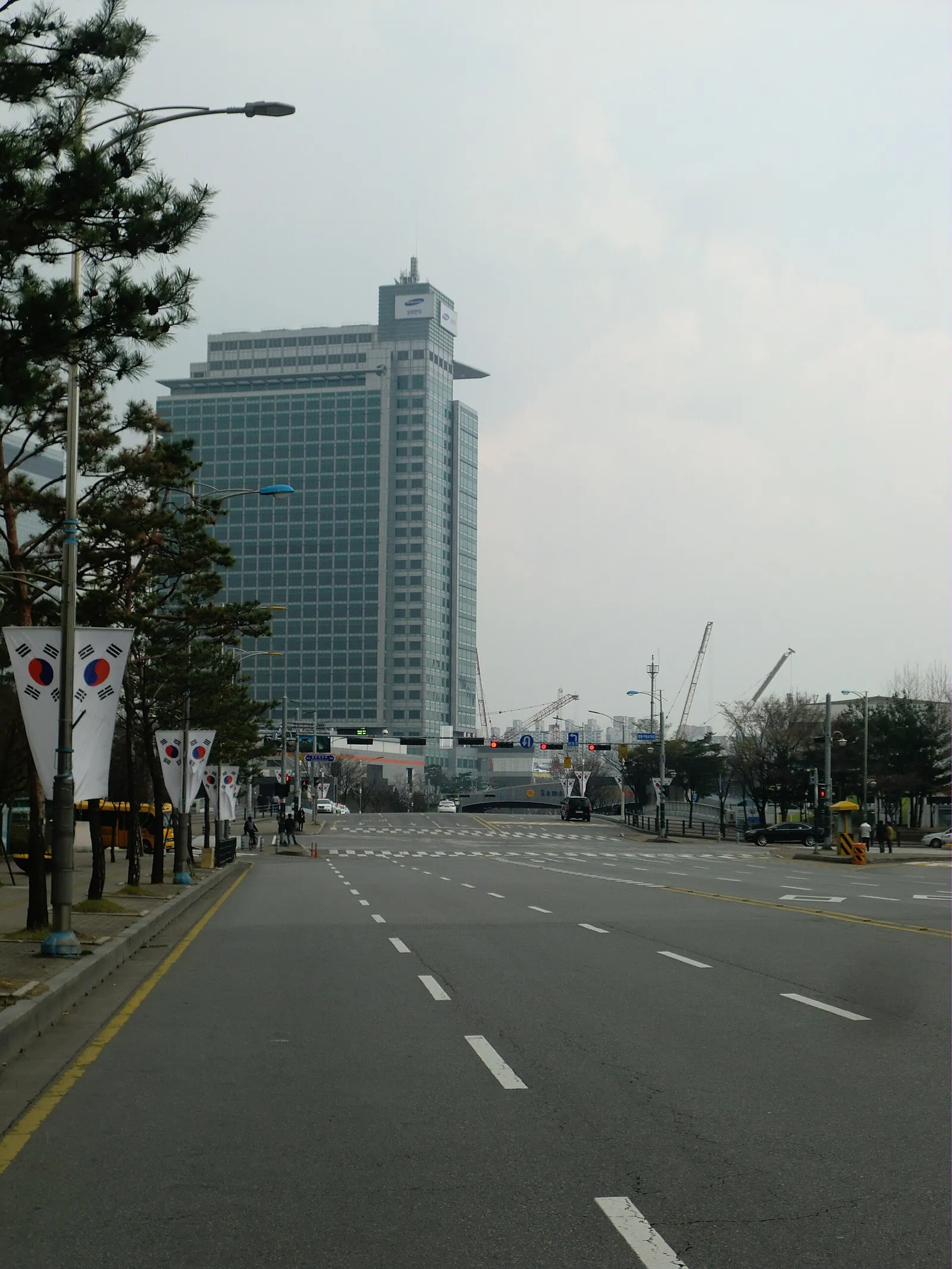
South Korea is preparing one of the largest industrial bets in its history. The country's two technology conglomerates — Samsung Group and SK Group, parents of memory-chip leaders Samsung Electronics and SK Hynix — are reportedly set to invest as much as $1.3 trillion (about 2,000 trillion won) over 10 years in semiconductors, AI data centers and what Korea calls "physical AI," Fortune reported. It is a combined, decade-long commitment, framed as part of President Lee Jae-myung's "Three Mega Projects" national push — so read it as a sweeping plan, not a single capital-spending line.
What the money builds
At the center are fabs — chip fabrication plants, the vast, ultra-clean factories where silicon wafers are turned into chips, each one costing well over $10 billion to build. Per Fortune, the plan envisions on the order of eight to ten new fabs in South Korea — roughly four to five each for Samsung and SK Hynix, anchored around the Gwangju area — plus expansions for chip packaging and NAND memory production in the Chungcheong provinces, and a build-out of AI data centers. (A precise split between chips and data centers isn't spelled out.)
Why the memory makers are spending now
The trigger is AI, and specifically memory. Samsung and SK Hynix are the world's two largest makers of memory chips, and AI has turned memory from a commodity into a bottleneck. Training and running large AI models devours high-bandwidth memory (HBM) — premium chips that feed data to AI accelerators at enormous speed — and the data-center boom is straining the supply of ordinary DRAM and NAND flash too. Boursel has covered the resulting memory shortage and the price spikes it has triggered.
Whoever can build the capacity to satisfy that demand stands to capture years of growth — which is why the spending is racing ahead. The risk cuts the other way too: memory is famously cyclical, prone to gluts when everyone expands at once, so a trillion-dollar build-out is also a bet that AI demand proves durable rather than a bubble.
A national strategy, not just corporate capex
The scale and framing make clear this is government-coordinated industrial policy as much as company guidance. Semiconductors are South Korea's largest export and a pillar of its economy, and Seoul is treating chip leadership as a national-security priority amid the US-China technology contest. The state is expected to help with the unglamorous essentials that decide where fabs go — permits, power and water, both of which advanced plants consume in huge quantities.
What it signals
For the global chip industry, the message is that the AI era's defining constraint is physical capacity — fabs, power and memory — and that the firms and countries with the deepest pockets are moving to lock it in for a decade. For rivals like America's Micron, and for the US and China racing to onshore their own chipmaking, it raises the stakes of an already brutally capital-intensive contest. And for investors, the eye-watering headline number is best read with a dose of caution: it is a multi-year, multi-segment national ambition whose details and timing will evolve. What's unmistakable is the direction — South Korea is doubling down, hard, on being indispensable to the machines that run AI.