Vietnam's National Assembly approved amendments to the country's customs law on Sunday that widen the state's power to stop counterfeit and infringing goods at the border. The changes take effect in March 2027.
The timing is the story. The US Trade Representative opened a Section 301 investigation into Vietnam's intellectual property regime in May, after designating the country a priority foreign country. Section 301 of the Trade Act of 1974 is the statute under which the United States has imposed tariffs on China since 2018. A country legislating while that investigation is open is not making a routine administrative fix.
What the law actually changes
Three things, and the second is the one importers should read twice.
Customs officers may now halt clearance on their own initiative where they identify clear signs of counterfeiting, rather than waiting for a rights holder to come forward. Rights holders can still trigger a suspension themselves by presenting evidence of infringement and posting a financial guarantee, which is the older mechanism and remains available.
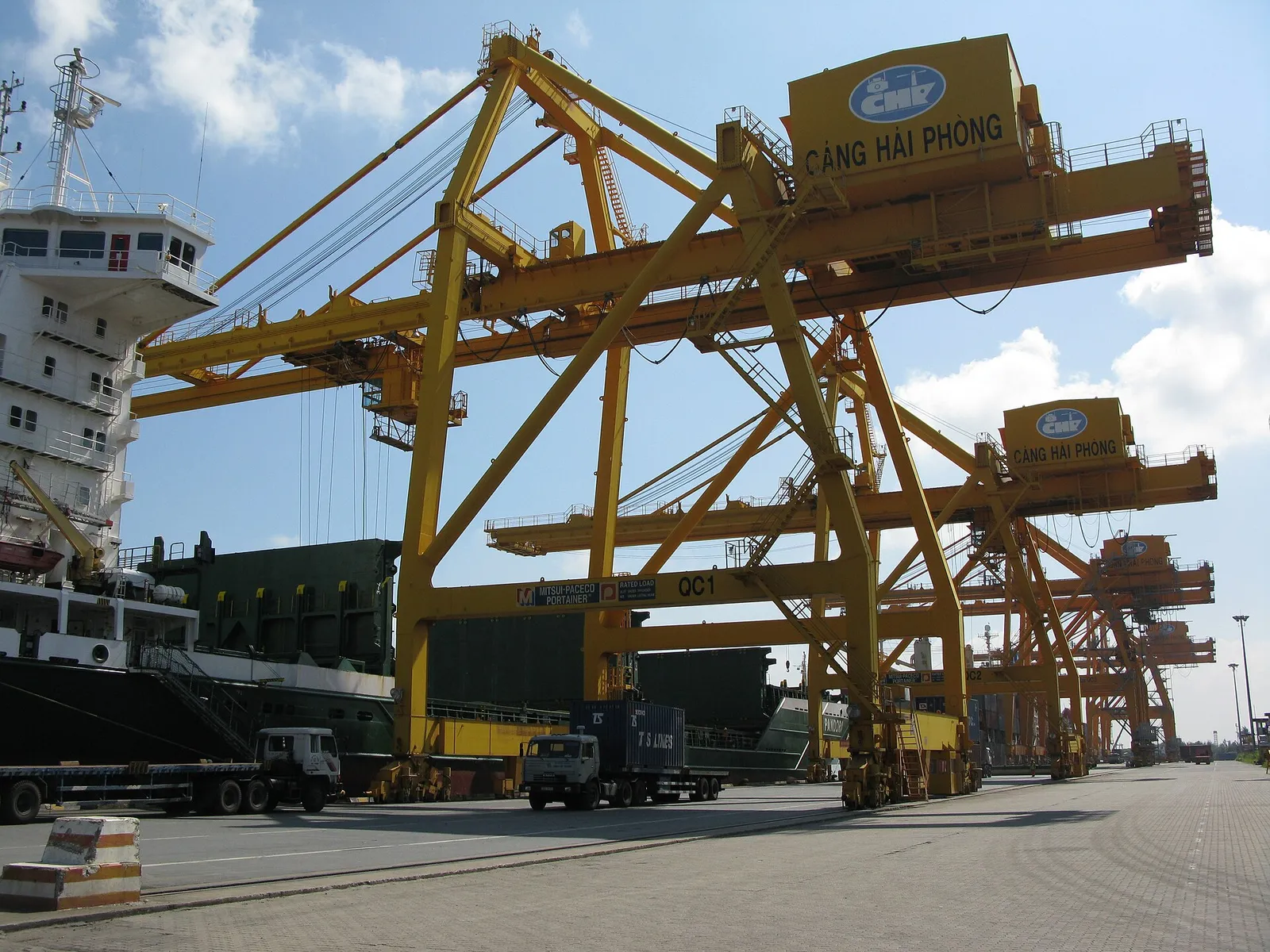
The power now reaches transit goods. Previously it covered imports and exports, meaning a container passing through a Vietnamese port on its way somewhere else was outside the regime. That gap is the one that makes a jurisdiction useful as a waypoint, and closing it is the change most likely to alter routing decisions.
Third, the law extends oversight to goods sold through e-commerce and requires platform operators to hand information to customs. This is the part with the widest reach and the least clarity, since what platforms must produce, and how quickly, will be settled in implementing regulations rather than in the statute.
Why Washington is looking
Vietnam is now one of the largest sources of imported goods in the United States, and the scale has been building fast. US goods imports from Vietnam were $193.88 billion in 2025 against $15.60 billion of US exports, a bilateral deficit of $178.28 billion, according to Census Bureau data.
The first half of 2026 has run ahead of that. Imports from Vietnam reached $123.19 billion through June, which is roughly 64 percent of the entire 2025 total in six months, with a deficit of $114.03 billion. June alone accounted for $25.17 billion of imports.
Numbers on that trajectory attract attention in Washington regardless of what is in the containers, and they attract a specific suspicion when a neighbouring country's goods are under tariff: that some of the growth is transshipment rather than manufacturing. The transit provision in Sunday's law addresses exactly that charge, whether or not it was written with it in mind.
What Section 301 can do
The Special 301 review is, in the USTR's own description, a Congressionally mandated annual review of the global state of intellectual property protection and enforcement. Priority foreign country is its most severe designation, and it is the step that opens the door to an investigation under Section 301.
That investigation is the consequential part. Section 301 authorizes the USTR to determine whether a foreign country's acts, policies or practices are unjustifiable, unreasonable or discriminatory and burden US commerce, and to respond with duties or other import restrictions if they are. The China tariffs that have shaped global supply chains for eight years were imposed under this authority. There is no requirement that the remedy be confined to the industries where the infringement was found.
USTR has not announced a determination in the Vietnam case, and nothing about Sunday's vote guarantees one will not come. What legislating does is give Hanoi something concrete to point at, which is a weaker position than having nothing and a weaker one than having a record of enforcement.
What to watch instead of the statute
Border enforcement regimes are not judged on their statutory language, and the USTR's stated concerns were about weak border enforcement and limited use of existing seizure authority rather than about missing legal powers. Vietnam has had customs authority to seize suspected counterfeits; the complaint was that it was not much used.
That makes seizure counts, not the text of the amendments, the number that will settle this. None were released with Sunday's vote, and the law does not take effect until March 2027, so the first meaningful evidence is more than a year away. Companies with Vietnamese manufacturing or transit exposure have that long to find out whether the change is procedural or real.