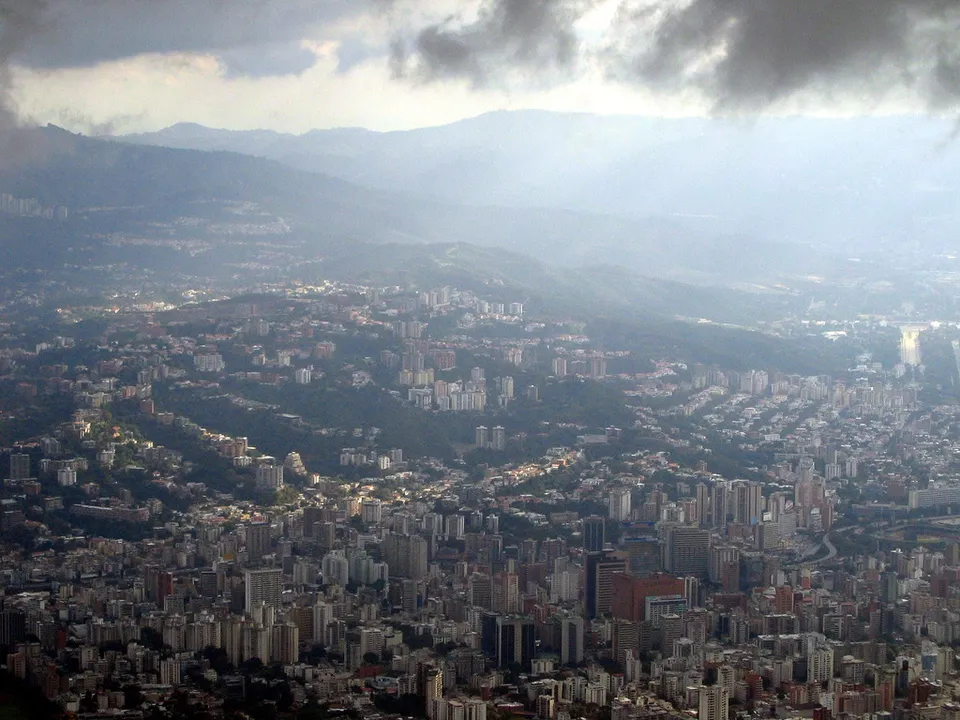
Steve Hanke, professor of applied economics at Johns Hopkins and now a special adviser to Venezuela's National Assembly, is proposing that the country give up the bolivar and adopt the US dollar outright. He puts the odds of approval at 50% to 80% and says it would be the largest such switch since the euro arrived in 1999.
The bolivar has fallen 78% against the dollar over the past year. Fortune describes inflation running at 400%; Trading Economics puts the July reading higher still. Either figure describes a currency that has stopped doing the job.
Three things that are not the same
Precision matters here because the options are routinely conflated.
A peg fixes the exchange rate by law while the country keeps printing its own money. It is cheap to declare and expensive to defend, because the central bank must sell dollars whenever the market tests the rate, and it fails when the reserves run out. Argentina's convertibility regime ended that way in 2002.
A currency board is stricter: local currency may be issued only against foreign reserves held at a fixed rate. There is no discretion to print. Hong Kong and Bulgaria run versions of this.
Full dollarization abolishes the domestic currency. There is no central bank balance sheet to manage, no discretionary monetary policy, and no lender of last resort. Ecuador did it in 2000, El Salvador in 2001, and Panama has used the dollar since 1904.
What the precedents show
Ecuador is the closest analogue and the strongest argument for the policy. It dollarized amid a collapse, with inflation above 100%, and has since run price stability for a quarter of a century, currently near 1.4% on Trading Economics data.
The cost was real and arrived later. When oil prices fell, Ecuador could not devalue to restore competitiveness, so the adjustment came through wages and employment instead, which is slower and more painful politically.
El Salvador dollarized from a position of low inflation, so the gain was smaller. Panama's long experience is genuinely stable but rests partly on a permanent dollar income from the canal that most countries do not have.
The pattern across all three: dollarization is most effective precisely when inflation is already out of control, because the thing it removes is the government's ability to print. It buys credibility that the government cannot supply itself, by outsourcing the decision to a foreign central bank.
What it costs
Three things, and they are permanent.
The country gives up devaluation as a shock absorber. For an oil exporter, that matters a great deal: when the oil price falls, a floating currency takes some of the strain, and a dollarized economy has to take all of it in domestic wages and prices.
It gives up seigniorage, the profit a government earns from issuing money that costs almost nothing to produce.
And it gives up the lender of last resort. In a banking panic, only the Federal Reserve can create dollars, and it has no obligation to a foreign banking system. A dollarized country must hold idle reserves against that possibility, which is expensive.
The constraint that decides it
To retire the bolivar, Venezuela needs enough dollars to buy back the monetary base. To keep functioning afterwards, it needs to earn dollars continuously, because it can no longer create them.
Both requirements run through oil, and Venezuela's oil exports are constrained by US sanctions. That is the circularity at the centre of the proposal: dollarization would stabilise prices, but the ability to sustain it depends on export earnings that are currently restricted by the same government whose currency would be adopted.
Debt compounds it. Venezuela owes roughly $250 billion, about 150% of GDP, and dollarization does nothing to reduce an obligation already denominated in foreign currency. It removes the option, however unattractive, of inflating away domestic liabilities.
The honest reading
For most Venezuelans, dollarization would formalise what already happens. Fortune notes that almost everyone outside government employment and state benefits already transacts in dollars.
That is an argument for doing it, and also a reminder of what it would and would not achieve. Adopting the dollar would end the inflation, because it ends the printing. It would not by itself restore the oil revenue, resolve the sanctions, or repay the debt, and the country would face all three without the monetary flexibility it has now.
This is reporting on a proposal under consideration and on the mechanics that determine whether such policies work. It is not a view on whether Venezuela should adopt it.