A deal in the fish pens is reshaping who farms North America's salmon. Cooke, the family-owned Canadian seafood giant, has agreed to buy the Atlantic Canada ("Canada East") salmon-farming operations of Mowi — the Norwegian company that is the world's largest salmon producer — for about C$225 million (roughly $158 million), Mowi said.
What's in the deal
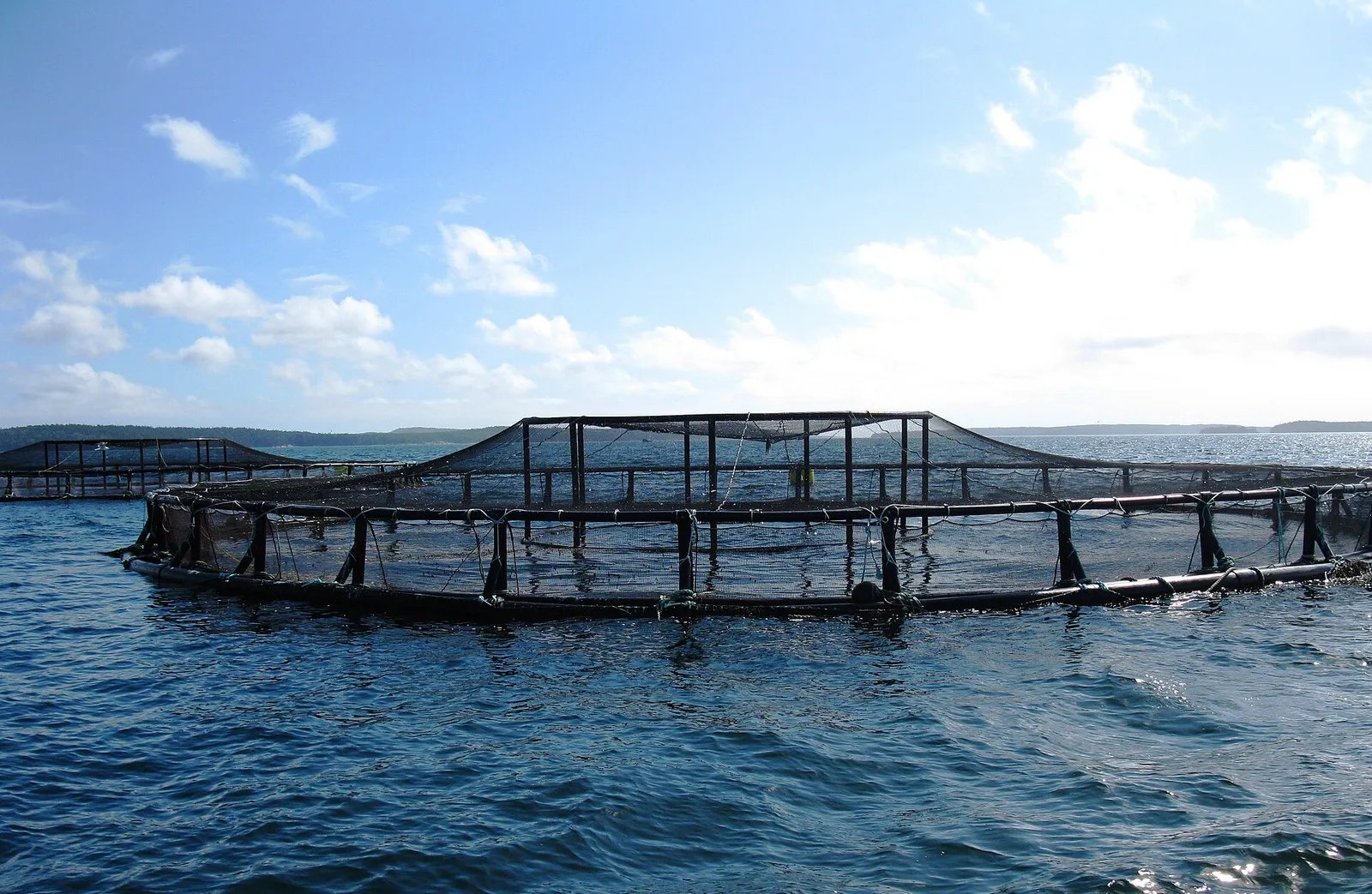
The sale covers Mowi's hatcheries, sea farms and two processing plants across New Brunswick, Prince Edward Island and Newfoundland and Labrador, along with roughly 250 employees, Undercurrent News reported. It's expected to close in the second half of 2026, subject to regulatory approval. For Mowi, it's a small slice of output — the Canada East operation produces only around 9,000 tonnes a year, against company-wide output of roughly 600,000 tonnes — but the exit comes at a cost: Mowi said it will book a write-down of about C$140 million on the sale.
Why Mowi is selling
For Mowi, Atlantic Canada had become non-core. The region offered no cost edge over its bigger operations in Norway, Scotland, Chile and the Faroe Islands, and the company is concentrating on higher-return geographies. (Note the geography: this deal is Atlantic Canada. Separately, on Canada's Pacific coast in British Columbia, the federal government is phasing out open-net-pen salmon farming by 2029 — a regulatory squeeze Boursel has tracked, but one that doesn't directly touch these east-coast assets.)
Why Cooke is buying
For Cooke, it's a chance to bulk up on home turf. Based in Saint John, New Brunswick and already the dominant aquaculture operator in Atlantic Canada, Cooke has grown over four decades — from a tiny family operation into one of the world's largest family-owned seafood companies, with operations spanning multiple countries — largely through a long string of acquisitions. Folding in Mowi's adjacent sites adds scale, capacity and the chance to wring out efficiencies next to its existing farms.
The bigger picture
The deal is a small but telling marker of consolidation in global salmon farming. It's a large, capital-intensive protein business that has steadily concentrated into a handful of big players per country — and it's increasingly shaped by geography and regulation. Producers are weighing where the rules are stable and the economics work: pressure on British Columbia's open-net farms is pushing the Pacific industry to shrink or change, while Atlantic Canada remains a comparatively settled base — exactly the turf Cooke is reinforcing.
Why it matters
For the salmon industry, it's another step toward fewer, larger operators controlling supply of one of the world's most popular farmed fish. For Mowi, it's portfolio housekeeping — shedding a low-margin outpost to focus capital where returns are higher. For Cooke, it's a bet that scale at home pays off in a cyclical, regulation-sensitive business. And for the broader story Boursel readers follow, it's a reminder that even in a quiet corner like fish farming, the same forces — consolidation, cost discipline and regulatory risk — are steadily redrawing the map. Boursel offers no view on either company; the takeaway is that the world's biggest salmon farmer is handing its Atlantic Canadian pens to its largest local rival.