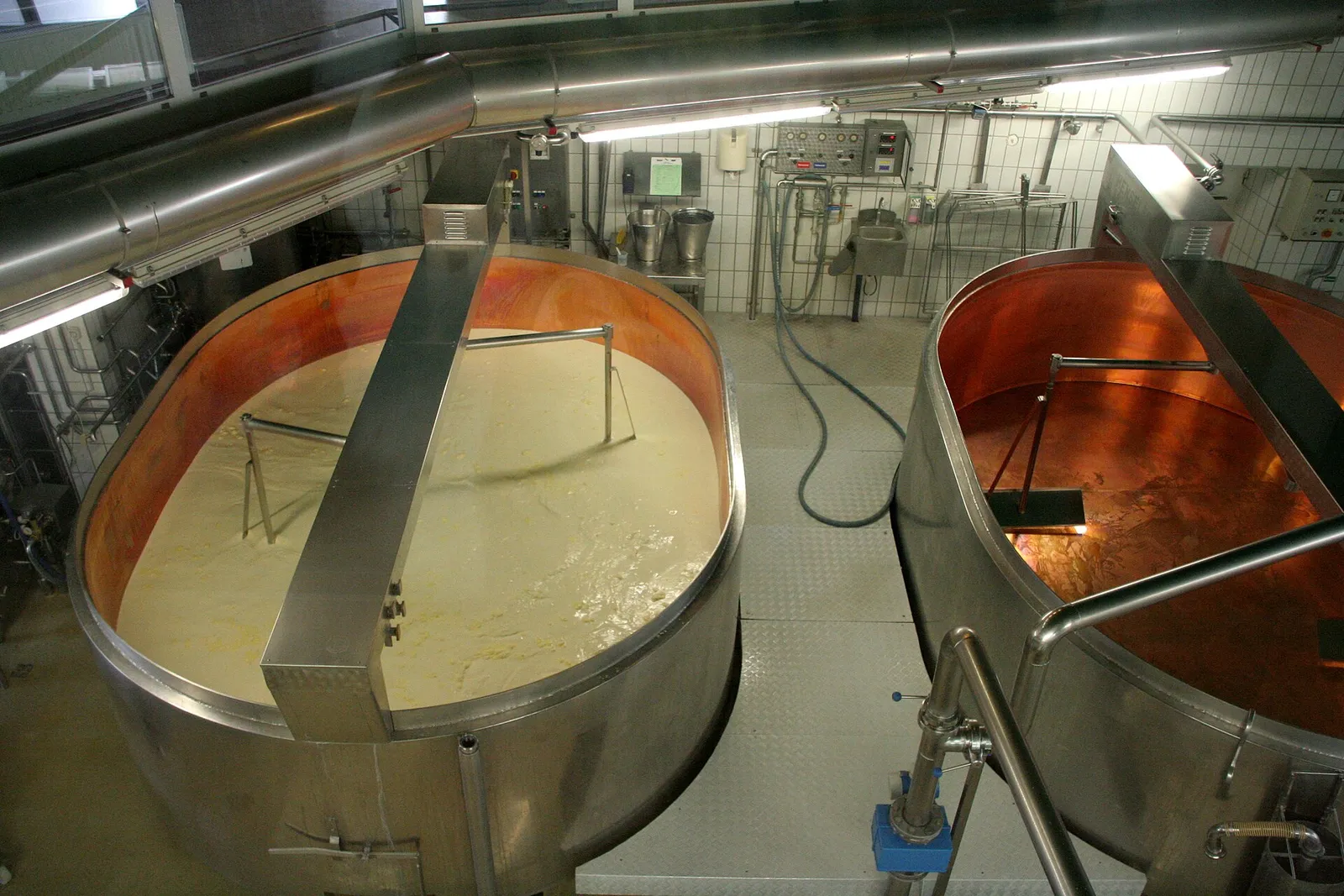
Few products have travelled as far, as fast, as whey. The thin liquid left over when milk is turned into cheese was for generations treated as a disposal problem. Now it is one of the food industry's hottest commodities.
From waste to wealth
Making cheese produces a lot of whey — roughly nine pounds of liquid whey for every pound of cheese. For most of dairy history that liquid was a nuisance: fed to livestock, spread on fields or simply dumped, until filtration technologies refined from the 1960s onward made it possible to strip out the water, lactose and fat and keep the protein.
That turned a byproduct into a product. Processed into whey protein concentrate (WPC) and the purer, pricier whey protein isolate (WPI), whey became the backbone of the sports-nutrition aisle — powders, bars and ready-to-drink shakes. Whey protein supplements now generate more than $10 billion in annual global revenue. (Whey protein is the protein separated out of that leftover liquid and dried into powder; concentrate is cheaper and less refined, isolate is more purified and higher in protein.)
Prices at records
The demand surge has collided with limited supply, and prices show it. Central U.S. dry whey climbed from a range of about $0.39–$0.69 a pound in 2024 to roughly $0.64–$0.70 by early 2026, according to USDA data. At the premium end the moves are far larger: spot whey protein concentrate has pushed past $11 a pound and isolate higher still — levels the market has not seen before, trade press reported.
Those input costs squeeze the companies that turn whey into finished products. Britain's MyProtein, owned by THG, saw its profit margin (measured as EBITDA) narrow from 5.9% in 2024 to 4.7% in 2025 as whey grew more expensive — a reminder that a commodity spike ripples straight through to the brands on the shelf. (EBITDA margin is a rough gauge of operating profitability, before interest, tax and accounting charges.)
Two engines of demand
What changed on the demand side? First, culture. High-protein eating — dubbed "proteinmaxxing" online — has spread from gym subculture into mainstream habit, with the strongest appetite among consumers aged 15 to 29 and women now buying protein products at rates that have caught up with men.
Second, and newer, is pharmaceutical. The explosive uptake of GLP-1 weight-loss drugs such as semaglutide has added a large, unexpected source of protein demand: because rapid weight loss can strip away muscle as well as fat, doctors and dietitians urge users to eat much more protein. With such drugs now used by more than one in ten Americans, that guidance moves markets. Some in the industry go further, projecting that cheap generic versions in big emerging markets could add billions of kilograms to annual whey demand — but those are speculative scenarios that depend on how fast the drugs spread, not established forecasts.
The bottleneck
Unusually, the shortage is not about milk. Cheese and milk output remain broadly stable; the constraint is the specialized filtration and membrane capacity needed to convert liquid whey into high-protein powder — costly equipment that takes years to install. With much of processors' output reportedly committed under forward contracts, new buyers have little room to buy on the spot market.
The industry is racing to catch up. Dairy majors including Fonterra, Glanbia, Arla and FrieslandCampina have announced expansions, but most new capacity is not expected to relieve the squeeze meaningfully before late 2026 or 2027.
Why it matters
For investors and food companies, whey is a case study in how a demand shock — half cultural, half pharmaceutical — can transform the economics of a humble ingredient and squeeze margins across a supply chain. For dairy farmers and processors, it is a windfall: a stream once worth almost nothing now commands record prices, rewarding those with the processing capacity to exploit it. And for consumers, it explains why that tub of protein powder keeps getting more expensive. Boursel gives no investment advice; the takeaway is a classic commodity story with a modern twist — when demand outruns the capacity to produce, prices climb until supply catches up or the craze cools, and whey is now firmly in that squeeze.