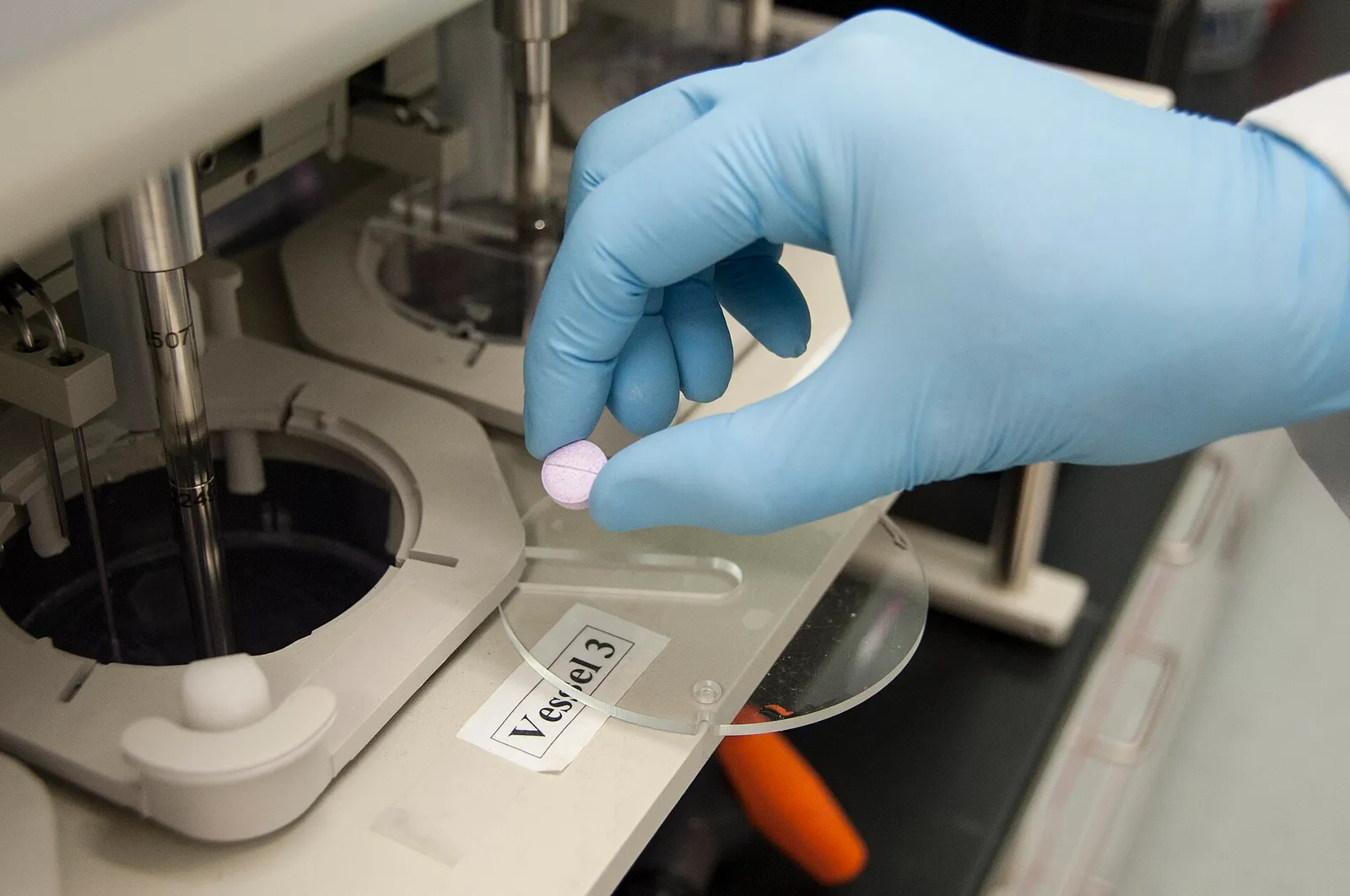
The US government is trying to make it faster to build a drug factory at home. The FDA's PreCheck program — launched in February — is designed to streamline the approval of new domestic pharmaceutical-manufacturing facilities, giving companies early, continuous agency guidance during design and construction rather than making them wait until a drug application is filed, the FDA said. According to CNBC, Eli Lilly and Regeneron are among the companies tapped for the first group — the FDA's formal cohort announcement was expected imminently. (We're attributing the participant list to that reporting; the agency's own confirmation is the final word.)
What PreCheck does
Standing up a new plant and getting it cleared to make medicines can take the better part of a decade. PreCheck aims to compress that by having the FDA engage before and during construction — reviewing facility design and processes early, so problems are caught on paper rather than after the concrete is poured. It's a pilot, limited to a small first cohort, and explicitly aimed at facilities that make critical medicines for the US market.
Why Washington wants this
The push is about supply-chain security. The US relies heavily on overseas production for its medicines: by widely cited estimates, the large majority of active pharmaceutical ingredients — the actual chemical substances in drugs — and a big share of finished products are made abroad, concentrated in China and India. That dependence has been thrown into relief by record drug shortages and by tariff and national-security debates over pharmaceuticals. The policy goal is resilience: more medicine made on US soil, less exposure to a foreign supply shock.
Industry has responded with a wave of spending. Drugmakers have collectively pledged hundreds of billions of dollars toward US manufacturing over the coming years — a reshoring capex boom that PreCheck is designed to grease.
Lilly and Regeneron, by the numbers
The two names linked to the program are among the most aggressive builders. Eli Lilly — riding demand for its blockbuster obesity and diabetes drugs — is investing about $3.5 billion in a new injectable-medicine plant in Pennsylvania, one of several major US facility announcements it has made, per the company. Regeneron is in the middle of a multibillion-dollar expansion of its US biologics manufacturing across New York and North Carolina, including a large contract-manufacturing partnership. For builders deploying that much capital, faster, more predictable regulatory clearance is a real advantage.
What it means
For Lilly and Regeneron, smoother facility approvals lower the time-and-uncertainty cost of huge capital projects. For the sector, PreCheck marks a shift in the FDA's posture — from arms-length reviewer toward active partner in reshoring — and reinforces a capex theme Boursel keeps returning to: the build-out of physical US capacity, whether in AI data centers or, here, drug plants.
The caveats are worth stating plainly. New domestic capacity takes years to come online — much of it not before 2028-2029 — so near-term reliance on foreign suppliers won't vanish, and tariffs or shortages can still bite in the meantime. And until the FDA publishes its official participant list, the specific names should be read as reported, not confirmed. But the direction is clear: the US is trying to rebuild a pharmaceutical supply chain it largely sent offshore — and is rewriting some of its own rulebook to do it.