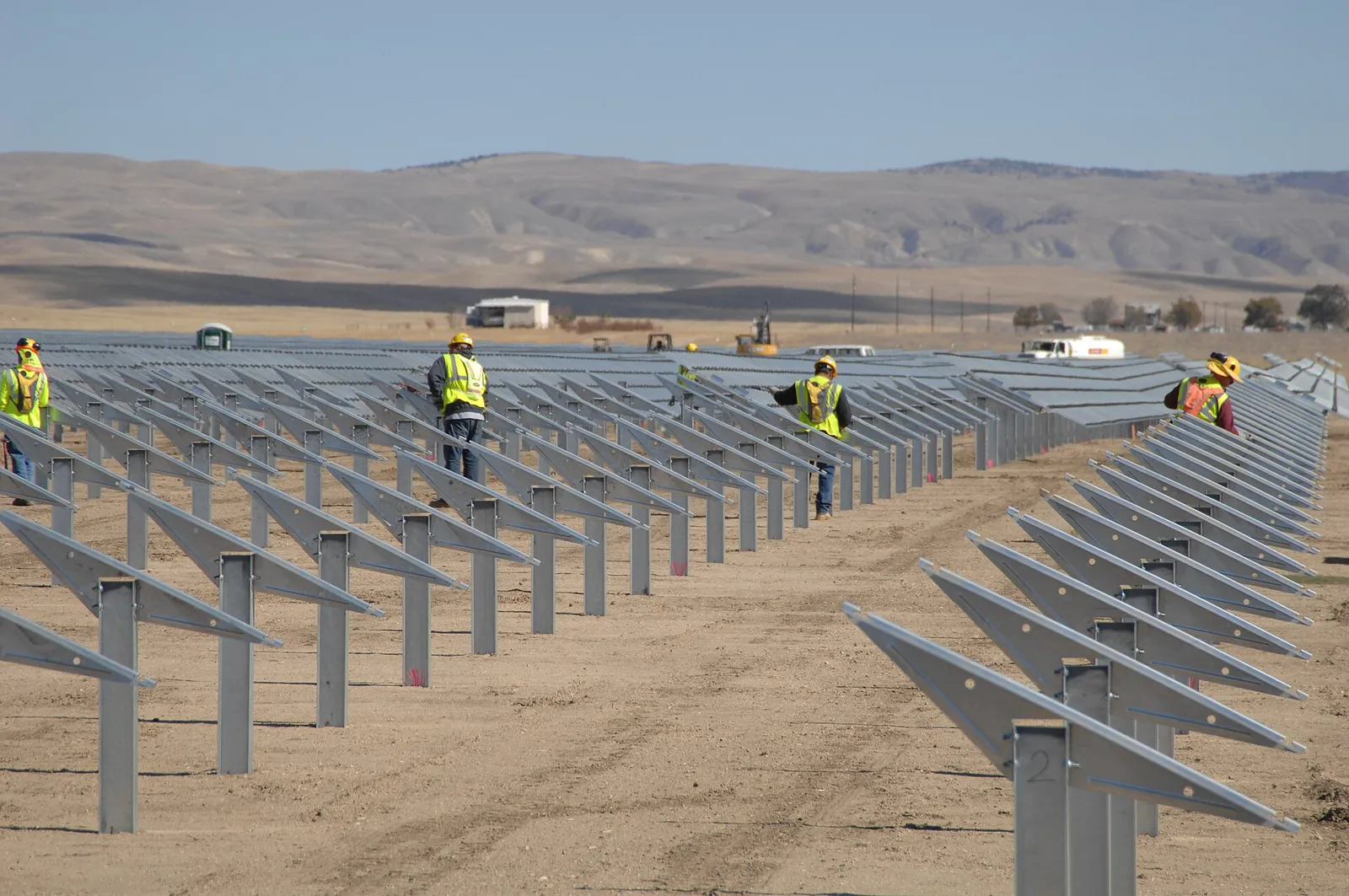
A long-running shift in America's power mix just hit a symbolic marker — with an asterisk worth understanding. In April 2026, US solar power generated more electricity than coal for the first time in any month, Ars Technica reported, drawing on federal data. Coal generation fell to an all-time monthly low. The catch, captured in that report's framing: solar won "but not on the grid."
The fine print: rooftop vs. utility-scale
US power data counts generation two ways. Utility-scale solar — big solar farms that feed electricity into the grid — shows up in the standard statistics tracked by the US Energy Information Administration (EIA). But millions of rooftop panels on homes and businesses operate "behind the meter": they power the building directly and largely don't appear in grid-dispatch data.
April's milestone depended on counting both. Add in EIA's estimate of small-scale (rooftop) solar, and total solar edged past coal. Look only at the utility grid, and coal may still have nudged ahead that month. So it's a genuine milestone for total solar generation — not (yet) proof that solar beat coal on the grid alone.
May removed the doubt
The picture got cleaner the next month. In May 2026, solar supplied a record ~12.8% of US electricity, edging out coal at ~12.2% — the first full calendar month on record that solar outproduced coal, according to energy think-tank Ember. April brought the symbolic first; May suggested it wasn't a fluke.
Why now — and the seasonal caveat
Timing matters. Spring is solar's friend: long, sunny days lift output while mild weather keeps power demand low, so the heavy, steady ("baseload") coal plants run less. Winter will likely flip the ranking back, when heating demand rises and daylight shrinks. In other words, this is partly a seasonal milestone — but it sits on top of a very real structural trend.
That trend is fast. Solar is the quickest-growing source of US power: utility-scale solar has been expanding well over 30% year-over-year, with rooftop adding more on top. Over roughly five years, solar's share of US electricity has about doubled, while coal's has nearly halved. New build-out overwhelmingly favors solar (plus batteries to smooth its daily peaks); almost no new coal plants are being built.
What it means for markets
For power markets and utilities, solar's rise reshapes the daily supply curve and raises the value of battery storage to shift cheap midday solar into the evening. In Texas's ERCOT grid, the EIA projects solar will out-generate coal for the full year for the first time in 2026. For investors, it reinforces the long structural tailwind behind solar and storage developers and the long fade of thermal coal — even as policy crosswinds (subsidies, tariffs, permitting) add noise, and coal remains important to winter reliability in parts of the Midwest and Southeast.
The bottom line
Read precisely, the milestone is this: counting every panel, US solar made more power than coal in April, and clearly beat it in May — a first, helped by spring's seasonality but riding a genuine, multi-year climb. Coal isn't gone; it still matters at peak demand and in certain regions. But the direction is unmistakable, and the data now shows the lines crossing. The energy transition isn't a forecast here — it's showing up in the monthly generation figures.